𝙿𝚊𝚜𝚌𝚊𝚕 𝙽𝚒𝚐𝚐𝚎𝚗𝚔𝚎𝚖𝚙𝚎𝚛 - 𝙴𝚗𝚜𝚎𝚖𝚋𝚕𝚎 𝚃𝚞𝚟𝚊𝚕𝚞 - 𝚍'𝚞𝚗𝚎 𝚛𝚒𝚟𝚎 𝚊̀ 𝚕'𝚊𝚞𝚝𝚛𝚎 by Niggenkemper, LaMar Gay, Laurain, Matbou Riahi, Badenhorst, Zimmermann, Vavatsika, Coudoux, Privat
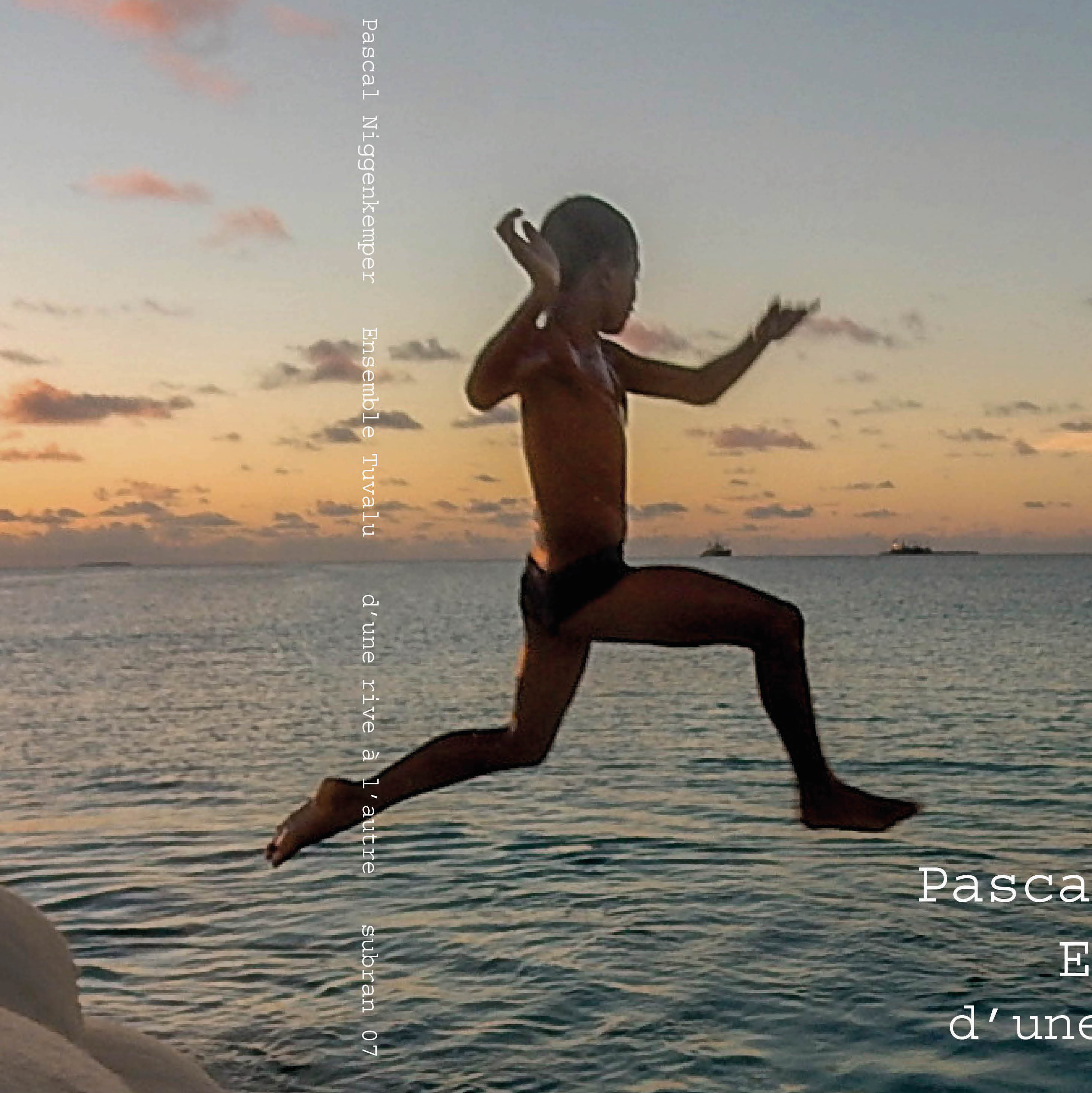
https://pascalniggenkemper.com/Ensemble-Tuvalu
𝖯𝖺𝗌𝖼𝖺𝗅 𝖭𝗂𝗀𝗀𝖾𝗇𝗄𝖾𝗆𝗉𝖾𝗋 𝖤𝗇𝗌𝖾𝗆𝖻𝗅𝖾 𝖳𝗎𝗏𝖺𝗅𝗎 𝗂𝗌 𝖼𝗈𝗆𝗆𝗂𝗌𝗌𝗂𝗈𝗇𝖾𝖽 𝖻𝗒 𝗍𝗁𝖾 𝖭𝖾𝗐 𝖬𝗎𝗌𝗂𝖼/𝖩𝖺𝗓𝗓 𝖾𝖽𝗂𝗍𝗈𝗋𝗂𝖺𝗅 𝗍𝖾𝖺𝗆 𝗈𝖿 𝗍𝗁𝖾
𝖲𝖶𝖱𝖪𝗎𝗅𝗍𝗎𝗋 𝖺𝗇𝖽 𝗉𝗋𝖾𝗆𝗂𝖾𝗋𝖾𝖽 𝖺𝗍 𝗍𝗁𝖾 𝖲𝖶𝖱 𝖭𝖾𝗐 𝖩𝖺𝗓𝗓 𝖬𝖾𝖾𝗍𝗂𝗇𝗀.
𝗉𝖺𝗌𝖼𝖺𝗅𝗇𝗂𝗀𝗀𝖾𝗇𝗄𝖾𝗆𝗉𝖾𝗋.𝖼𝗈𝗆/𝖤𝗇𝗌𝖾𝗆𝖻𝗅𝖾-𝖳𝗎𝗏𝖺𝗅𝗎
𝖤𝗇𝗌𝖾𝗆𝖻𝗅𝖾 𝖳𝗎𝗏𝖺𝗅𝗎
𝖯𝖺𝗌𝖼𝖺𝗅 𝖭𝗂𝗀𝗀𝖾𝗇𝗄𝖾𝗆𝗉𝖾𝗋 - 𝖽𝗈𝗎𝖻𝗅𝖾 𝖻𝖺𝗌𝗌, 𝖼𝗈𝗆𝗉𝗈𝗌𝗂𝗍𝗂𝗈𝗇, 𝗌𝗈𝗎𝗇𝖽 𝗂𝗇𝗌𝗍𝖺𝗅𝗅𝖺𝗍𝗂𝗈𝗇
𝖡𝖾𝗇 𝖫𝖺𝖬𝖺𝗋 𝖦𝖺𝗒 - 𝖼𝗈𝗋𝗇𝖾𝗍, 𝗏𝗈𝗂𝖼𝖾
𝖫𝗈𝗎𝗂𝗌 𝖫𝖺𝗎𝗋𝖺𝗂𝗇 - 𝗍𝗋𝗎𝗆𝗉𝖾𝗍, 𝗏𝗈𝗂𝖼𝖾
𝖬𝗈𝗇𝖺 𝖬𝖺𝗍𝖻𝗈𝗎 𝖱𝗂𝖺𝗁𝗂 - 𝖼𝗅𝖺𝗋𝗂𝗇𝖾𝗍, 𝗏𝗈𝗂𝖼𝖾
𝖩𝗈𝖺𝖼𝗁𝗂𝗆 𝖡𝖺𝖽𝖾𝗇𝗁𝗈𝗋𝗌𝗍 - 𝖼𝗅𝖺𝗋𝗂𝗇𝖾𝗍, 𝗏𝗈𝗂𝖼𝖾
𝖳𝗂𝗓𝗂𝖺 𝖹𝗂𝗆𝗆𝖾𝗋𝗆𝖺𝗇𝗇 - 𝖺𝖼𝖼𝗈𝗋𝖽𝗂𝗈𝗇, 𝗏𝗈𝗂𝖼𝖾
𝖠𝗋𝗍𝖾𝗆𝗂𝗌 𝖵𝖺𝗏𝖺𝗍𝗌𝗂𝗄𝖺 - 𝖺𝖼𝖼𝗈𝗋𝖽𝗂𝗈𝗇, 𝗏𝗈𝗂𝖼𝖾
𝖤𝗅𝗂𝗌𝖺𝖻𝖾𝗍𝗁 𝖢𝗈𝗎𝖽𝗈𝗎𝗑 - 𝖼𝖾𝗅𝗅𝗈, 𝗏𝗈𝗂𝖼𝖾
𝖩𝖺𝗎𝗆𝖾𝗌 𝖯𝗋𝗂𝗏𝖺𝗍 - 𝗏𝗈𝗂𝖼𝖾 𝗈𝗇 𝗍𝗋𝖺𝖼𝗄 𝟣𝟧
The Western Pacific archipelagic nation of Tuvalu has high levels of exposure to both local and abstract climate change stressors. The sea level rise poses a fundamental risk to its very existence. Tuvalu’s vulnerability to the impacts of climate change characterises it as a ‘sinking’ nation.
This reality inspired Pascal to form the musical ensemble Tuvalu with the intention to reflect on the human relation to nature using texts and poems slammed in the native tongues of each ensemble player : French, Flemish, Greek, English, Farsi, German and Occitan.
The stage plot consists of sixteen sounding curtains which surround the audience, 8 musicians and a poet circling nine sounding islands at the very center which symbolise the South Sea archipel Tuvalu.
The octet is made up of two almost identically quartets or four duos that make Tuvalu sing, hiss, shimmer, hum and scream: a carpet of sound from which colors, patterns, melodies and improvisations emerge.* Pascal Niggenkemper’s Tuvalu is initiated by the SWR New Jazz Meeting 2024
liner notes :
Sun, sea, and sand – Tuvalu in the South Pacific: a paradise, a place of longing... once upon a time. Now, the Polynesian island nation has become synonymous with the consequences of climate change. Storm surges, coastal erosion, and rising sea levels are expected to render Tuvalu uninhabitable in a few decades, wiping the country off the map. The government has already begun moving the nation into the digital realm, because when the islands have sunk and all the inhabitants have migrated to different places, they will at least still have a virtual home in the metaverse. Dystopian scenario or smart future?
“In general, the future will simply be a time of change for many people around the world,” says Pascal Niggenkemper. “And I think it’s important – we also have a role to play in this sense – to talk about it, and make people aware about different realities through our music.”
Pascal Niggenkemper took his dismay at the alarming — but inconsequential for global climate policy — predictions of Tuvalu’s impending demise as the inspiration for “Tuvalu – d’une rive à l’autre.” This scenic, lyrical, musical project is not about a documentary or cautionary presentation of data and facts. The question is how we as a society will respond to the changes that are to be expected, how we will deal with the loss or transformation of habitats and cultures.
The Tuvalu Ensemble, founded specifically for this purpose, consists of four duos with almost identical line-ups: Artemis Vavatsika and Tizia Zimmermann on accordion, Mona Matbou Riahi and Joachim Badenhorst on clarinet, Ben LaMar Gay on cornet and Louis Laurain on trumpet, Elisabeth Coudoux on cello and Pascal Niggenkemper on double bass. All members of the ensemble also sing or speak traditional Tuvaluan songs and poetic texts in various languages. What connects these texts is their exploration of the human-nature relation. They ask: What do we see in nature? How do we interact with it — and it with us? How beautiful, but also how cruel — and possibly finite — can our relationship be?
An archipelago of sound within the circle of the ensemble forms the center of the stage: drums and metal discs - amplified with exciters - symbolizing the nine main islands of Tuvalu. With mallets, metal chains, table tennis balls, and other small objects, it can be played from all sides and creates a pictorial and musical connection to the place that will soon no longer exist.
Sixteen sound curtains hang around the ensemble, a spacious installation made of metal and plastic panels with exciter resonators. These can be activated by the musicians using foot pedals. In this way, they transform their instrumental or vocal sounds into peculiar acoustic creatures with trembling, quivering, clattering voices. Like a hyperinstrument, this setup adds an extra dimension to the music – similar to the commenting chorus in a Greek tragedy. During live performances, the audience sits in the middle of the action, between the musicians and the sound curtains. For Pascal Niggenkemper, this is central: “The idea is that the audience immerses itself in this world, that we all immerse ourselves in this world.” Not as distant observers, but as participants in the story of a place that is only seemingly distant.
Despite its apocalyptic theme, “Tuvalu – d’une rive à l’autre” sounds less gloomy than one might expect. Although there are dark, evocative elements, deep drones, and intense orchestral soundscapes, there are also very delicate and playful passages with light sounds, intimate dialogues, and flowing lightness.
This music is difficult to assign to a genre, and why should it be? The artistic backgrounds of the ensemble members are as diverse as the sounds they produce, with echoes of blues, jazz, soul, hip hop, new music, noise, and various folk traditions.
Pascal Niggenkemper conceived the musical narrative framework for this, but he deliberately leaves a lot of room in his composition: “I like working that way in ensembles. Not as a leader saying: Okay, we’re going to do this — buckle up, we’re going to Tuvalu. I see it more like this: I bring an idea and a few elements, and from there we develop it further together. Then things emerge that I could never have heard or seen on my own.”
Niggenkemper is interested in how differently people are shaped — culturally, socially, emotionally — not only in musical terms. He is concerned with broadening perspectives, recognizing other points of view, and collective thinking and creation.
In this way, the project also reflects a central cultural value of Tuvaluan society: “Kaitasi” – the principle of always shaping one’s own life in connection with the community.
An idea that could hardly be more relevant in our time. - Julia Neupert
////
Sonne, Meer und Strand – Tuvalu im Südpazifik: ein Paradies, ein Sehnsuchtsort … früher mal.Mittlerweile ist der polynesische Inselstaat zum Synonym geworden für die Folgen des Klimawandels. Sturmfluten, Küstenerosionen und Meeresspiegelanstieg werden Tuvalu voraussichtlich in wenigen Jahrzehnten unbewohnbar machen, das Land von der Weltkarte tilgen. Schon jetzt hat die Regierung den Umzug der Nation ins Digitale begonnen, denn wenn die Inseln versunken sind, alle Einwohner*innen an verschiedene Orte migriert, soll es im Metaverse zumindest virtuell weiter eine Heimat für sie geben. Dystopisches Szenario oder Smart Future?
„Es wird generell in der Zukunft einfach so sein, dass sich für viele Menschen auf unserer Welt Sachen ändern werden“, sagt Pascal Niggenkemper. „Und ich denke, es ist wichtig für uns als Musiker – da haben wir auch in gewisser Weise eine Funktion – zu versuchen, davon zu erzählen, weil wir Geschichten in einer gewissen Weise erzählen.“
Seine Bestürzung über die alarmierenden – aber für die globale Klimapolitik folgenlos bleibenden – Prognosen zum drohenden Untergang von Tuvalu hat Pascal Niggenkemper zum Anlass für „Tuvalu – d’un rive a l’autre“ genommen. In diesem szenisch-lyrisch-musikalischen Projekt geht es nicht um eine dokumentarische oder mahnende Aufbereitung von Daten und Fakten. Es geht um die Frage, wie wir als Gesellschaft den zu erwartbaren Veränderungen begegnen, wie wir mit dem Verlust oder der Transformation von Lebensräumen und Kulturen umgehen.
Das eigens hierfür gegründete Tuvalu-Ensemble besteht aus vier nahezu gleich besetzten Duos mit Artemis Vavatsika und Tizia Zimmermann am Akkordeon, Mona Matbou Riahi und Joachim Badenhorst an der Klarinette, Ben LaMar Gay am Kornett und Louis Laurain an der Trompete, Elisabeth Coudoux am Violoncello und Pascal Niggenkemper selbst am Kontrabass. Alle im Ensemble singen oder sprechen auch – traditionelle tuvaluische Lieder und poetische Texte in verschiedenen Sprachen. Was diese Texte verbindet, ist die Auseinandersetzung mit dem Thema Mensch und Natur. Sie fragen: Was sehen wir in der Natur? Wie interagieren wir mit ihr – und sie mit uns? Wie schön, aber auch wie grausam – und womöglich endlich kann unser Verhältnis sein?
Eine Klang-Inselgruppe im Kreis des Ensembles bildet das Zentrum der Bühne: Trommeln und metallene Scheiben, die die neun Hauptinseln Tuvalus symbolisieren. Mit Schlägeln, Metallketten, Tischtennisbällen und anderen kleinen Objekten ist sie von allen Seiten bespielbar und stellt eine zugleich bildhafte wie musikalische Verbindung her zu dem Ort, den es bald nicht mehr geben wird.
Um das Ensemble herum hängen 16 Klangvorhänge – eine raumgreifende Installation aus Metall- und Kunststoffplatten mit Exciter-Resonatoren. Diese lassen sich von den Musiker*innen per Fußpedale aktivieren. So verwandeln sie ihre Instrumental- oder Vokalklänge in eigentümliche akustische Kreaturen mit bebenden, zitternden, scheppernden Stimmen. Wie ein Hyperinstrument erweitert dieses Setup die Musik um eine zusätzliche Dimension – ähnlich dem kommentierenden Chor in einer griechischen Tragödie.
Bei Live-Aufführungen sitzt das Publikum mitten im Geschehen, zwischen Musiker*innen und Klangvorhängen. Für Pascal Niggenkemper ist das zentral: „Die Idee ist, dass das Publikum in diese Welt eintaucht, dass wir alle eben in diese Welt eintauchen.“ Nicht als distanzierte Beobachtende, sondern als Beteiligte an der Geschichte eines nur scheinbar fernen Ortes.
Trotz des apokalyptischen Themas klingt „Tuvalu – d’un rive à l’autre“ weniger düster als sich vielleicht vermuten ließe. Zwar gibt es auch dunkel Beschwörendes, tiefe Drones oder heftige orchestrale Klanggewitter, dann aber auch ganz zarte und verspielte Passagen mit sehr lichten Sounds, intimen Dialogen oder fließender Leichtigkeit.
Einem Genre lässt sich diese Musik schwerlich zuordnen – und warum auch? So vielfältig die künstlerischen Backgrounds der Ensemblemitglieder, so facetten- und abwechslungsreich tönt es hier mit Anklängen an Blues, Jazz, Soul, Hiphop, Neuer Musik, Noise, verschiedenen Folkloretraditionen.
Pascal Niggenkemper hat dafür den musikalisch-erzählerischen Rahmen konzipiert, aber er lässt in seiner Komposition bewusst viel Raum: „Ich mag es, in Ensembles so zu arbeiten. Nicht als Leader zu sagen: ‚Okay, wir machen das – schnallt euch an, wir fahren nach Tuvalu.‘ Ich sehe es eher so: Ich bringe eine Idee und ein paar Elemente mit, und von dort aus entwickeln wir es gemeinsam weiter. Dann entstehen Dinge, die ich allein nie hätte hören oder sehen können.“
Wie unterschiedlich Menschen geprägt sind – kulturell, sozial, emotional – interessiert Niggenkemper nicht nur musikalisch. Es geht ihm um die Erweiterung von Perspektiven, um das Anerkennen anderer Sichtweisen, um kollektives Denken und Schaffen.
So spiegelt das Projekt auch einen zentralen kulturellen Wert der Tuvaluischen Gesellschaft wieder: „Kaitasi“ – das Prinzip, das eigene Leben stets in Verbundenheit mit der Gemeinschaft zu gestalten.
Eine Idee, die in unserer Zeit aktueller kaum sein könnte.
- Julia Neupert
///
Soleil, mer et plage – Tuvalu dans le Pacifique Sud : un paradis, un lieu de rêve... autrefois. Aujourd'hui, cet État insulaire polynésien est devenu synonyme des conséquences du changement climatique. Les tempêtes, l'érosion côtière et l'élévation du niveau de la mer rendront probablement Tuvalu inhabitable dans quelques décennies, effaçant ainsi le pays de la carte du monde. Le gouvernement a déjà commencé à faire passer la nation au numérique, car lorsque les îles auront disparu et que tous les habitants auront émigré vers différents endroits, ils pourront au moins continuer à avoir un foyer virtuel dans le métaverse. Scénario dystopique ou avenir intelligent ?
« À l'avenir, il est certain que les choses vont changer pour beaucoup de gens dans le monde », déclare Pascal Niggenkemper. « Et je pense qu'il est important pour nous, en tant que musiciens – car nous avons aussi un rôle à jouer à cet égard –, d'essayer d'en parler, car nous racontons des histoires d'une certaine manière. »
Pascal Niggenkemper s'est inspiré de son inquiétude face aux prévisions alarmantes – mais sans conséquence pour la politique climatique mondiale – concernant la disparition imminente de Tuvalu pour créer « Tuvalu – d'un rivage à l'autre ». Ce projet scénique, lyrique et musical n'est pas une présentation documentaire ou alarmiste de données et de faits. Il s'agit plutôt de savoir comment nous, en tant que société, allons faire face aux changements prévisibles, comment nous allons gérer la perte ou la transformation des habitats et des cultures.
L'ensemble Tuvalu, spécialement créé à cet effet, se compose de quatre duos presque identiques avec Artemis Vavatsika et Tizia Zimmermann à l'accordéon, Mona Matbou Riahi et Joachim Badenhorst à la clarinette, Ben LaMar Gay au cornet et Louis Laurain à la trompette, Elisabeth Coudoux au violoncelle et Pascal Niggenkemper lui-même à la contrebasse. Tous les membres de l'ensemble chantent ou parlent également – des chansons traditionnelles tuvaliennes et des textes poétiques en différentes langues. Ce qui relie ces textes, c'est la réflexion sur le thème de l'homme et de la nature. Ils posent les questions suivantes : que voyons-nous dans la nature ? Comment interagissons-nous avec elle – et elle avec nous ? À quel point notre relation peut-elle être belle, mais aussi cruelle – et peut-être éphémère ?
Un archipel sonore au centre de l'ensemble forme le cœur de la scène : des tambours et des disques métalliques symbolisent les neuf îles principales de Tuvalu. À l'aide de baguettes, de chaînes métalliques, de balles de ping-pong et d'autres petits objets, il peut être joué de tous les côtés et crée un lien à la fois visuel et musical avec ce lieu qui disparaîtra bientôt.
Autour de l'ensemble sont suspendus 16 rideaux sonores – une installation spatiale composée de plaques métalliques et plastiques équipées de résonateurs Exciter. Ceux-ci peuvent être activés par les musiciens à l'aide de pédales. Ils transforment ainsi les sons de leurs instruments ou de leurs voix en créatures acoustiques singulières aux voix tremblantes, frémissantes et cliquetantes. À la manière d'un hyper-instrument, cette installation ajoute une dimension supplémentaire à la musique, à l'instar du chœur commentateur dans une tragédie grecque.
Lors des représentations en direct, le public est assis au cœur de l'action, entre les musiciens et les rideaux sonores. Pour Pascal Niggenkemper, c'est essentiel : « L'idée est que le public plonge dans cet univers, que nous plongions tous dans cet univers. » Non pas en tant qu'observateurs distants, mais en tant que participants à l'histoire d'un lieu qui n'est qu'apparemment lointain.
Malgré son thème apocalyptique, « Tuvalu – d'un rivage à l'autre » est moins sombre qu'on pourrait le supposer. Il y a certes des passages sombres et évocateurs, des drones profonds ou de violents orages sonores orchestraux, mais aussi des passages très délicats et enjoués avec des sons très légers, des dialogues intimes ou une fluidité aérienne.
Il est difficile de classer cette musique dans un genre particulier – et pourquoi le ferait-on ? Les parcours artistiques des membres de l'ensemble sont aussi variés que les sonorités sont riches et variées, avec des accents de blues, de jazz, de soul, de hip-hop, de musique contemporaine, de noise et de différentes traditions folkloriques.
Pascal Niggenkemper a conçu le cadre musical et narratif, mais il laisse délibérément beaucoup de place dans sa composition : « J'aime travailler ainsi dans des ensembles. Je ne veux pas être un leader qui dit : « OK, on fait ça, attachez vos ceintures, on part pour Tuvalu. » Je vois plutôt les choses ainsi : j'apporte une idée et quelques éléments, et à partir de là, nous développons ensemble. Il en résulte alors des choses que je n'aurais jamais pu entendre ou voir seul. »
Les différences entre les individus – sur le plan culturel, social, émotionnel – n'intéressent pas seulement Niggenkemper sur le plan musical. Il s'agit pour lui d'élargir les perspectives, de reconnaître d'autres points de vue, de penser et de créer collectivement.
Le projet reflète ainsi une valeur culturelle centrale de la société tuvaluane : « Kaitasi », le principe qui consiste à toujours mener sa vie en lien avec la communauté.
Une idée qui ne pourrait être plus actuelle à notre époque.
- Julia Neupert
Tracklist
| 1. | Seai Se Mea | 2:09 |
| 2. | Faka Paku | 5:49 |
| 3. | O Mamai | 6:01 |
| 4. | Microwomen | 5:29 |
| 5. | From Island To Island | 3:42 |
| 6. | Lingilingi | 2:05 |
| 7. | Manu Eva | 6:55 |
| 8. | Mataliki | 3:41 |
| 9. | Te Ataeaoi Nei In | 0:49 |
| 10. | Anga | 2:43 |
| 11. | Fakamatamata | 6:13 |
| 12. | Manuia te moana | 1:17 |
| 13. | Tai fanake | 3:03 |
| 14. | Fuligafou | 3:50 |
| 15. | Tala Kai A Fatu | 5:26 |
| 16. | Ke to mai te sau mai te langi | 1:54 |
| 17. | Sasale | 3:42 |
Credits
CD recorded at Südwestrundfunk Baden-Baden Nov 18-22, 2024
DVD recorded live at Tollhaus Karlsruhe on November 23, 2024
Recording engineer Robert Müller
Sound director (mix and master) Manfred Seiler
Producer & editorial Julia Neupert
All compositions by Pascal Niggenkemper except:
CD-tracks 6, 12 & 16 Mona Matbou Riahi, Joachim Badenhorst CD-track 8 Tizia Zimmermann, Artemis Vavatsika
CD-track 10 Ben LaMar Gay, Louis Laurain
CD-track 13 Elisabeth Coudoux, Pascal Niggenkemper
Inside photo by SWR - cover photo by Michael Coghlan
Licensed by SWR Media Services
License
All rights reserved.

subran
musiques
aventureuses