Tides by Stefan Schultze
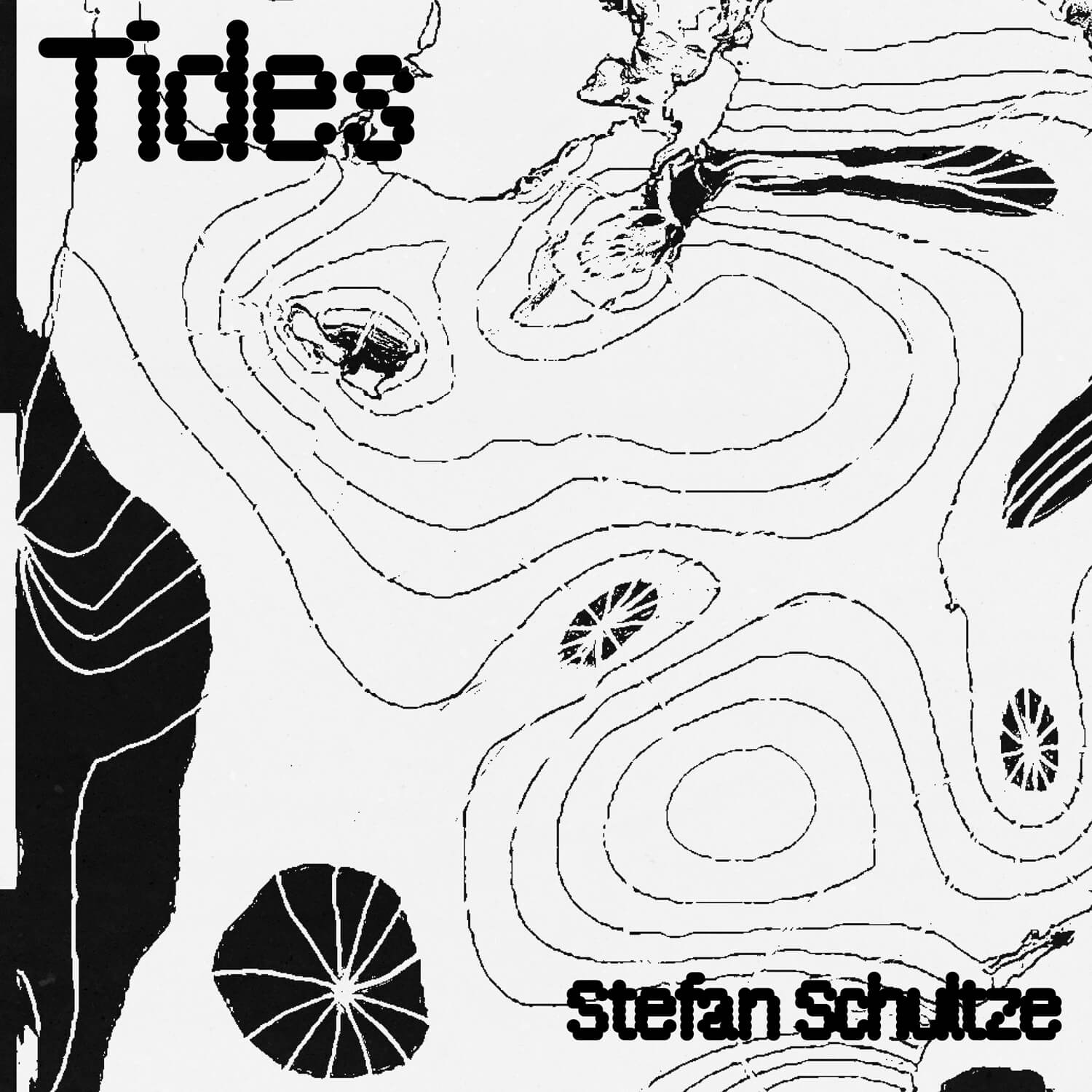
Excerpted from the liner notes to the album Tides from the conversation with Simon Rose
"Improvisation activates an inner archive — a memory built from experience — that I draw on in real time. It's not about fixed timing, but about listening and allowing something new to unfold. I deliberately avoid metronomic time; instead, I focus on sonic events and phrasing that remain fluid.
Playing solo means creating counterpoint with myself. I sometimes introduce sounds that suggest other instruments, imagining my playing as a dialogue or ensemble. This process often leads away from equal temperament and into more open, resonant textures.
In pieces like Glade, I work with just a few pitches and slightly shift preparations to create subtle beatings and overtone interactions. I don’t fix objects anymore — I let the preparations change during performance, allowing the unknown to guide me. It's less about control, more about listening closely and staying with what emerges."
Credits
Tides
1. Sanctum (Stefan Schultze)
2. Glade (Stefan Schultze)
3. Nomad (Stefan Schultze)
4. Elsewhere (Stefan Schultze)
5. Tide (Stefan Schultze)
All tracks created by Stefan Schultze
Recorded
December 10th, 2022 and Feb 27th - March 1st, 2025 at Loft Cologne by Christian Heck
Mixed
May 08th - 11th, 2025 at tonart-studio by Christian Heck at tonart-studio
Mastered: May 28th, 2025 by Christian Heck at tonart-studio
Design / Artwork: Lorenz Klingebiel
Artistic Director & Producer: Stefan Schultze
Tides
Stefan Schultze
Pianist and composer Stefan Schultze in conversation with saxophonist and researcher Simon Rose about the making of the solo album Tides.
SR: While you have a long history of composing in written form, I'm aware that with Tides you are very much dealing with improvisation. How do you regard improvisation and its relation to ideas of composition?
SS: A big aspect of improvisation for me is that, whether in collaboration with others or by myself, I'm building an inner archive - or an inner memory, that I can activate, it’s something that needs to be on in real-time when you improvise. This has its own presence and focus while you're doing it, whereas talking to you now, doesn’t have the same focus. While improvising, the focus is with listening and remembering and trying to come up with something new. It’s hard to convey improvisation’s meaning and it’s always a problem when people discuss improvisation. I think of improvisation as a collaboration between an inner listening archive gained through experience and something that happens in real-time taking place through a very active presence.
SR: On listening to Tides, I immediately felt your sense of time and the act of playing in the music, the action of playing as an activity, that has its own quality that was forming the music. Your own sense of time and timing feels tangible, and central to your improvisational approach. You're using, for example, silence and much of the music is not dependent on metric time. The sense of timing seems emergent and gradual, and some of the tracks are very slow. The approach might be heard as sounding very simple but when you listen to the whole it's a very complex sound-world. There are elements of control and elements in which you're not trying to overly control the sound and what it's doing (often simultaneously). But I think at the centre of it, is your own sense of time. I’m curious to know more about how you are thinking about time and timing and pacing?
SS: What I'm trying to do is improvise and listen to what is there and be aware of what might come. It's about introducing an idea to the listener. It's not about very fixed timing - I think that would destroy the music. So you're right, I'm purposefully trying not to have too structured a feel of metronomic time, because once you go there, you are in a different world of listening in which much can feel preconceived. I come from a background where time is used in a more conventional way but in my improvisation practice I tend to think of that as a disturbance to what I'm trying to achieve. So I'm using what we could call non-metric time, or elements, which leave the music more open for the listener. Having said that, there are pieces in which I like to improvise knowingly with metric time, but I don't want to pre-form too much. The piano is usually such a clear instrument for the pianist with so many distinct cultural and historical associations but I’m interested in putting sounds in the listener's ear and creating a flow of things, and not becoming overly-structured. It's more about sonic events, but sonic events in flow. Memory is important, as well as listening and I ask myself: What might come? It has more to do with a focus on the sonic spectrum. The things I'm doing have a fluidity, the phrasing for example, and the inner phrasing of small rhythmical elements, and this fluidity helps represent the various preparations. This process tends to lead me away from equal temperament. It’s a state in which the elements and the whole remain not perfectly clear, and with this, the timing can be fluid.
SR: What is your preferred way of recording music using such an approach?
SS: I like to work at the Loft, Cologne and very much like recording with sound engineer Christian Heck, we work well together. They have a Steinway piano and second piano for preparations. Recording solo through improvisation I like to be in the right state of mind and Christian understands this.
SR: Solo improvisation is a very particular activity, what are the challenges for you and what are the benefits?
SS: The challenge of solo improvisation is to create a counterpoint with yourself, to create material that has stories that go in different directions. With another person you always have a counterpoint and so many options and if you're a strong player you can be very free, you can make it sound good, and people accept it. When alone, I think I have to have an inner dialogue with myself and this means listening very carefully. I'm trying to develop interesting material without somebody else suggesting direction and that's challenging. I'm addressing this question, in part, through the use of preparations. At times I’ll introduce elements into the music that can sound like other instruments and in this way I’ll think of my playing as a duo, trio, quartet or quintet. I'm actively discovering how these things become different voices, like in a fugue. This is also a challenge, because I need to create spaces for the voices in the process of improvising. I find these nice moments for different categories of sound. I work with things that create an ‘open’ sound that goes beyond the conventions of the standard piano.
SR: This multiple voices theme is characteristic. In Sanctum, for example, after some minutes a distinctly different voice appears, almost like a horn, I’m guessing it's a bowed chopstick that's resonating while held within the strings, and this initiates a gradual shift in the development of the piece. It's characteristic of your particular way of composing with improvisation. This approach allows material to emerge in a kind of organic way or for ideas to gradually morph.
SS: I’m probably quite an organic improviser/listener. I’m drawn to field recordings - how ‘natural’ things are on field recordings. I'm not saying I want to represent nature but when you're walking through a landscape things come up that might not necessarily belong there, and you accept them. When improvising I’m not trying to hold onto a meta concept as some do in composition. I try to not force things. However, when I work in a compositional manner, I may well produce tracks and techniques that work much more with contrast, with surprise, various technologies and extremes. Overall, a lot of the time when I’m working with improvisation, and especially when I'm solo, I really like to just be in the flow – it’s probably that simple. It gives me a really good feeling. As I play solo I like to listen to sounds emerge and blend and then something else comes up and I play with this, rather than toss things around or go to crazy volumes, which I do with other people, when we have some pieces like Horsepower (Schultze, Rose Ten Thousand Things 2015), I love it, but in my own practice, a lot of the time, I don't feel the need. It's more like I'm being with myself, with my thoughts. It's more an offer to listen in with me - I will structure something for you.
SR: Glade with its gong sounds and silence is reflective and a good example of playing and remaining with less material while using your improvisatory approach. The piece becomes an accumulation of different sounds. How do you think about the use of reduced sounds and silence and the inclusion of more material?
SS: On Glade, most of the time it was the same two or three pitches but as I improvised I very slightly moved the preparations, altering the tuning which creates beatings. My focus here in this piece is with what happens after you hear the notes begin to sound, the twenty seconds that happen afterwards, and how the overtones of these two or three pitches interact in different combinations of beatings or oscillations. So the work is about a mode of listening to the whole sound spectrum and the fine detail within the sound but it’s also about the action of playing itself.
SR: Would it also be true to say that a significant part of this is the leaving of things unfixed? You're listening to the thing that’s happening that in itself informs what your next move might be?
SS: Yes, these days, when I'm playing prepared piano with objects I never fix things, I go to the gig and start to use the objects. When I started, I liked to spend hours preparing the piano - I don't do that anymore. I might use one object and the initial sound and from there allow myself to be surprised. And I will change preparations live. And the way I change it isn’t necessarily that controlled. I like to use the preparations in a way in which I’m aware of a range of possibilities but I don’t know exactly how the spectrum of frequencies will be altered and this can lead to the unexpected, which I like. It became a lot of fun, it involves letting go. I don't need to know the science behind the sound that is produced but I need to know that I’m capable of dealing with it.
License
All rights reserved.Recommendations
 Seven Whites
by Peter Ehwald, Stefan Schultze, Tom Rainey
 Untucked in Hannover
by TOM RAINEY OBBLIGATO with Ingrid Laubrock, Ralph Alessi, Jacob Sacks and Drew Gress
 Precious Energy ReUp
by Barney McAll
 Precious Energy
by Barney McAll ft. Gary Bartz
 nourriture de l'amour
by Barney McAll
 An Extra Celestial Christmas
by Barney McAll
Composer and pianist Stefan Schultze is one of the most multifaceted and original musicians to come out of the German jazz scene. A Berliner by choice, Schultze studied piano and composition in Cologne and in New York. He occupies the interface between new music, improvisation and jazz with which he has most definitely created his own style.