Next Act by Steep Canyon Rangers
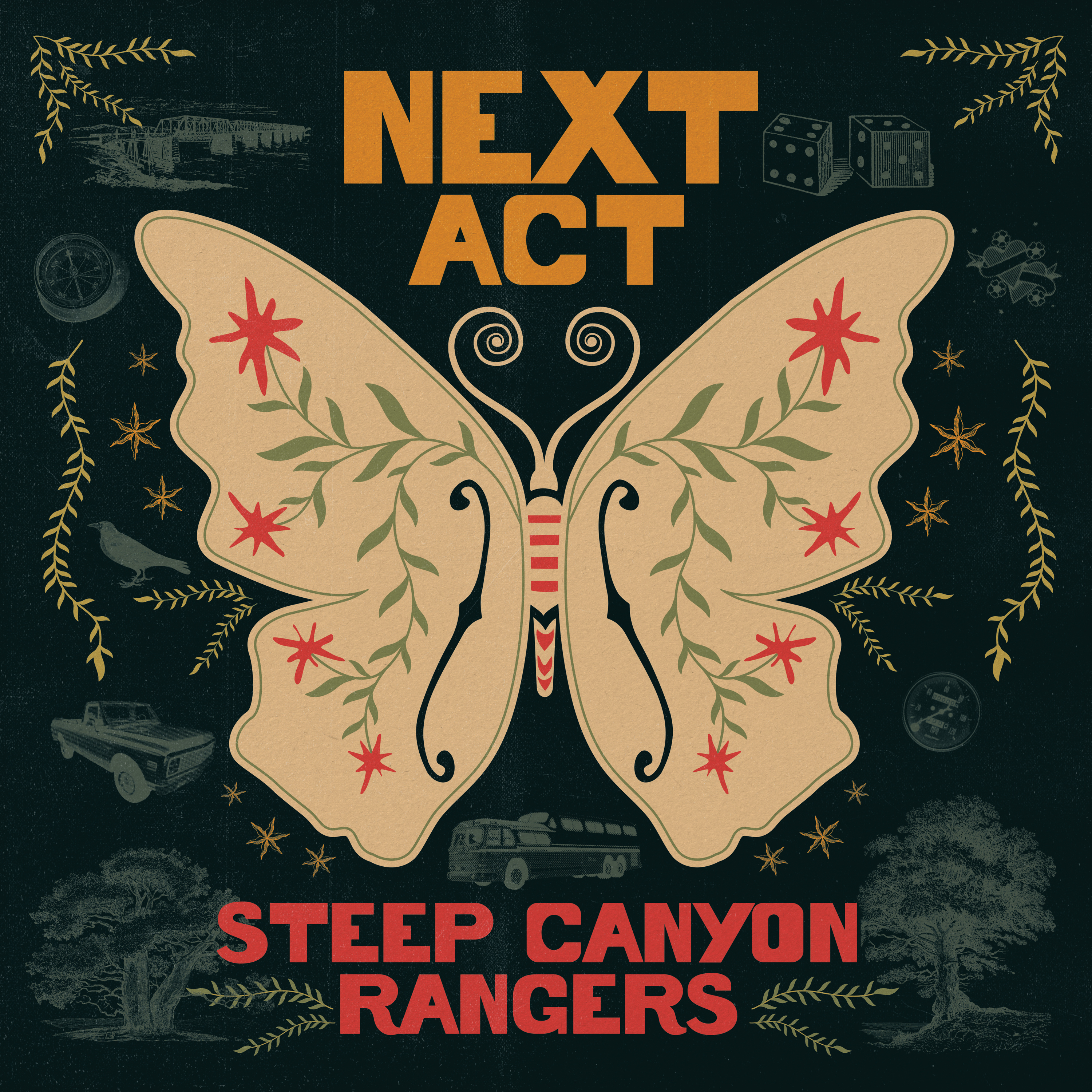
Steep Canyon Rangers arrive at a moment of renewal and reaffirmation with Next Act, their 15th studio album. The record represents a conscious tightening of focus: a return to the bluegrass foundations that first bound the band together, approached with the confidence and emotional range earned through years of collective evolution. It is an affirmation that bluegrass still contains endless expressive possibility. Next Act finds the Rangers sounding deeply at home in their own musical language, drawing strength from tradition while continuing to write new chapters within it.
Formed in North Carolina and shaped equally by the Appalachian Mountains and the Piedmont, Steep Canyon Rangers have long occupied a singular space in American roots music. From their earliest recordings, the band demonstrated an unusual ability to honor traditional bluegrass forms while allowing contemporary songwriting, literary influence, and regional storytelling to seep naturally into the music. Over time, this balance earned them both bluegrass credibility and broader Americana acclaim, culminating in a Best Bluegrass Album GRAMMY Award for 2013’s Nobody Knows You, additional nominations for Rare Bird Alert (2012) and North Carolina Songbook (2020), and an induction into the North Carolina Music Hall of Fame.
In recent years, as their audience expanded and their songwriting reach grew wider, the Rangers began to feel a pull back toward the elemental forces that shaped them: acoustic instruments speaking clearly, songs built for ensemble interplay, and stories grounded in lived experience and regional memory. Next Act emerges from that impulse. It is an affirmation that bluegrass still contains endless expressive possibility.
The album opens with “Rumble Strips,” a song that sets the emotional and thematic tone for what follows. Written by Aaron Burdett and shaped through conversations with banjoist Graham Sharp, the track borrows its central metaphor from roadside warning grooves, those sudden vibrations that alert a driver they’ve drifted off course. Applied to a relationship, the image becomes both intimate and universal, suggesting that not every misstep requires a dramatic reckoning; sometimes awareness and a slight correction are enough. Musically, the song reflects the band’s recommitment to clarity and feel, letting the arrangement serve the story rather than overwhelm it.
The title track, “Next Act,” embodies the album’s ethos in both form and content. Sharp intentionally left space in the arrangement, resisting the instinct toward constant motion that often defines bluegrass performance. The result is a song that breathes, allowing silence and restraint to carry emotional weight. Lyrically, it tells the story of a friend who endured heartbreak and emerged stronger, a quiet testament to resilience that mirrors the band’s own creative posture at this stage of their career.
Urgency enters the record with “Circling the Drain,” a tense, propulsive track inspired in part by Barbara Kingsolver’s novel Demon Copperhead. Sharp’s songwriting channels the novel’s sense of precarity and momentum, with an introduction that immediately establishes danger and unease. The Rangers’ performance heightens that tension, demonstrating how traditional instrumentation can still convey modern emotional stakes.
Themes of history, chance, and generational continuity recur throughout Next Act, perhaps most clearly on “Heart’s the Only Compass.” Sparked by stories from Sharp’s grandparents and the contemporary phenomenon of uncovering family histories through DNA testing, the song reflects on how arbitrary and unknowable the past often is. It finds comfort in the realization that previous generations were improvising too, making monumental choices without certainty. In that light, following one’s heart becomes not naïve, but necessary. The song features a contribution from their longtime collaborator Steve Martin on banjo.
Aaron Burdett’s songwriting continues to deepen the emotional palette of the Rangers’ catalog. “Halfway to Reno” began as a road song, written while Burdett and drummer Mike Ashworth traveled through the American West. Snippets of conversation from an interview with Edie Brickell sparked lyrical ideas that eventually fused with a guitar groove Burdett had been developing. The song captures a fleeting moment, the strange clarity that comes from being between destinations. When Brickell later agreed to sing on the track, the collaboration felt less like a guest appearance and more like a natural extension of the song’s origin story.
“Some Days” returns the album firmly to bluegrass tradition, pairing sorrowful, desperate lyrics with exuberant, joyful playing. The contrast is deliberate and time-honored: grief and delight coexisting in the same breath. Having produced much of the record themselves, the band allowed themselves moments of experimentation within that framework, subtly shaping texture and tone without compromising the song’s core energy.
Place and memory surface vividly on “Sugar Lake,” Sharp’s recollection of a flooded quarry in Chatham County, North Carolina, where he and friends swam during summers in the late 1990s. The song captures the hazy freedom of youth while acknowledging the passage of time, its details rendered with affection and discretion. Names are changed, but the emotional truth remains intact, grounding the song firmly in lived experience.
One of the album’s most striking moments arrives with “The Kindest Thing.” Originally arranged in a more traditional bluegrass style, the song was dismantled and rebuilt after fiddler Nicky Sanders challenged the initial approach. What emerged is among the most delicate and emotionally resonant recordings in the band’s catalog, a testament to the creative trust that allows Steep Canyon Rangers to continually refine and reimagine their work.
Hope tempered by perspective defines “Hard Times,” another Burdett-penned track. The song reflects on adversity with the benefit of hindsight, acknowledging how moments that once felt overwhelming can later soften into memory, sometimes even carrying a strange nostalgia. It is a gentle reminder that time itself can reshape emotional truth.
“Back of Beyond” draws inspiration from Horace Kephart’s Our Southern Highlanders, borrowing a phrase used to describe the most remote hollows of Appalachia. Sharp uses the image to explore changing times, migration, and the people who either remain rooted or feel compelled to leave. Notably, the song lingered across multiple album cycles before finally insisting on being recorded here, reinforcing the idea that some stories demand patience before finding their proper moment.
“Roll of the Dice” traces Burdett’s early months traveling with the band, a period marked by emotional complexity and transition. Originally written in a different form, the song evolved significantly after Sharp encouraged revisions to the opening verse. The final version is intentionally broad and non-specific, allowing listeners to project their own experiences of uncertainty and emotional vulnerability onto the narrative.
Love, in all its uncontrollable force, takes center stage on “Stubborn Love,” a song Burdett wrote about his life with his wife, Jade. Drawing language from a valentine she once gave him featuring a passage from Mary Oliver, the song celebrates devotion as something instinctive and overwhelming, and sometimes occasionally unsuitable. It stands as one of the album’s most personal and affecting statements.
“Babylon Stone” showcases the full breadth of the Rangers’ collaborative power. With multiple lead singers, shifting feels, and key changes, the song epitomizes what many fans recognize as a quintessential Steep Canyon Rangers arrangement. Lyrically, it balances scale and specificity, acknowledging that what weighs a person down can be either trivial or monumental.
The album closes with “Hard Luck Kid,” a quietly devastating portrait inspired by a brief encounter Sharp had late one night at a subway shop in Shelby, North Carolina. The man wanted nothing but to talk. The song offers no resolution, only a hope (spoken rather than sung), that the subject of the story has found a better path. It is an ending that resists neat conclusions, fitting for a record so invested in honesty and human complexity.
Taken as a whole, Next Act affirms Steep Canyon Rangers’ belief that bluegrass is a living tradition capable of holding modern stories and emotional nuance. By returning to their roots, the band reclaims the music that first shaped them and demonstrates that growth does not always mean expansion, sometimes it means listening more closely.
Steep Canyon Rangers are Graham Sharp (banjo, vocals), Mike Guggino (mandolin/mandola, vocals), Aaron Burdett (guitar, vocals), Nicky Sanders (fiddle, vocals), Mike Ashworth (drums, dobro, guitar, vocals), and Barrett Smith (bass, guitar, vocals).
Over the course of their career, the three-time GRAMMY nominees have released 14 studio albums, three collaborative albums with actor and banjoist Steve Martin, performed on some of the world’s most storied stages, and earned a reputation as standard-bearers for contemporary bluegrass and Americana.
Tracklist
| 1. | Rumble Strips | |
| 2. | Next Act | 3:14 |
| 3. | Circling the Drain | 3:16 |
| 4. | Heart's the Only Compass (feat. Steve Martin) | 3:29 |
| 5. | Halfway to Reno (feat. Edie Brickell) | |
| 6. | Some Days | |
| 7. | Sugar Lake | |
| 8. | The Kindest Thing | |
| 9. | Hard Times | |
| 10. | Back of Beyond | |
| 11. | Roll of the Dice | |
| 12. | Stubborn Love | |
| 13. | Babylon Stone | |
| 14. | Hard Luck Kid | |
Videos
Credits
2026 Yep Roc, LLC. All Rights Reserved.
Mike Ashworth - drums, dobro, guitar, percussion, vocals
Aaron Burdett - guitar, vocals
Mike Guggino - mandolin, mandola, vocals
Nicky Sanders - fiddle, vocals
Graham Sharp - banjo, vocals
Barrett Smith - bass, guitar, vocals
Produced by Mike Ashworth and Steep Canyon Rangers
Recorded by Julian Dreyer at Echo Mountain Recording, Asheville, NC
Mixed by Derek Studt
Mastered by Mike Westbrook
License
All rights reserved.Tags



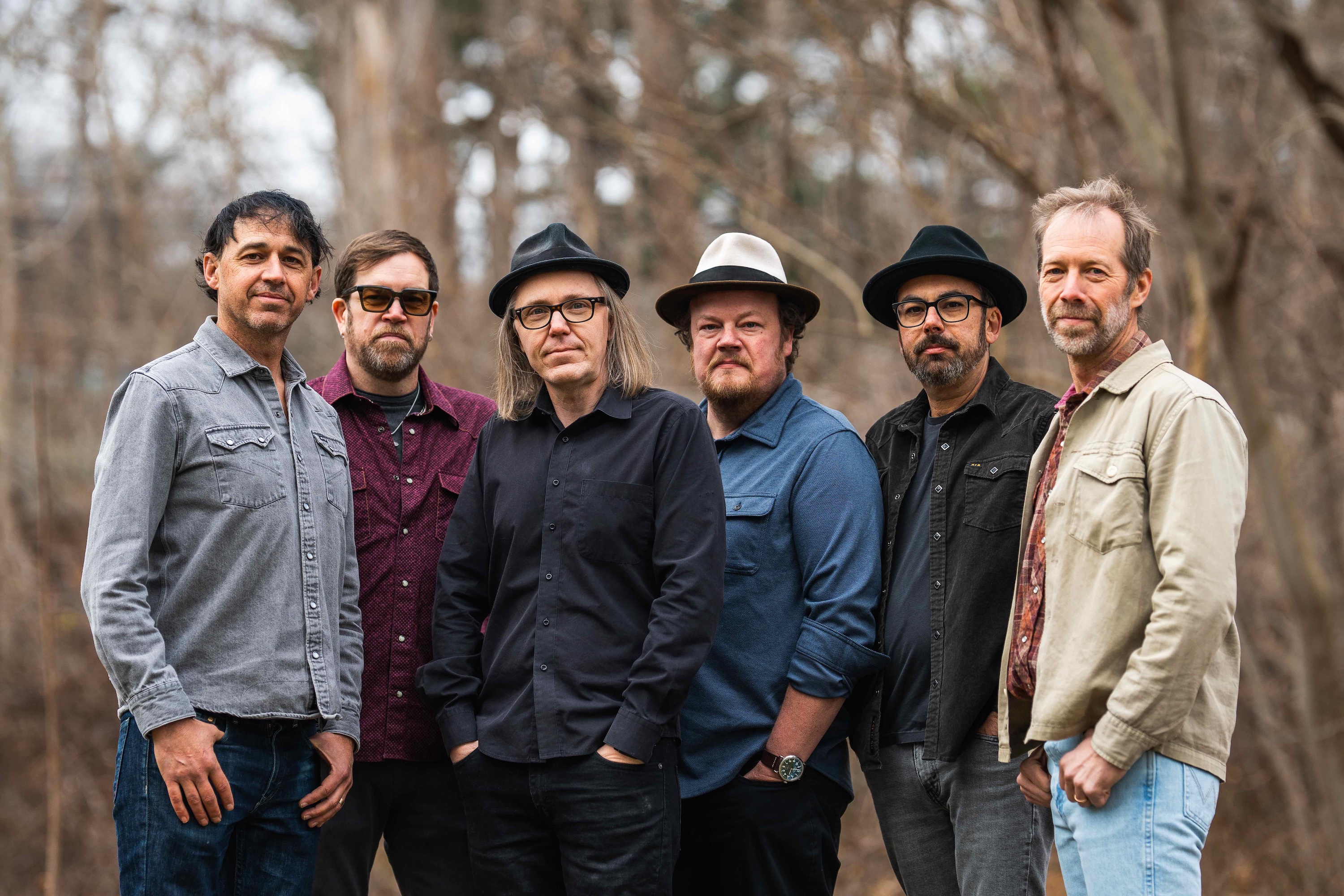
Steep Canyon Rangers have spent two decades bending and shaping bluegrass, wedding it to pop, country, folk rock, and more to create something original and all their own. The genre-defying band has developed a remarkable catalog of original music that links them to the past while at the same time, demonstrates their ambitious intent to bring string-based music into contemporary relevance.