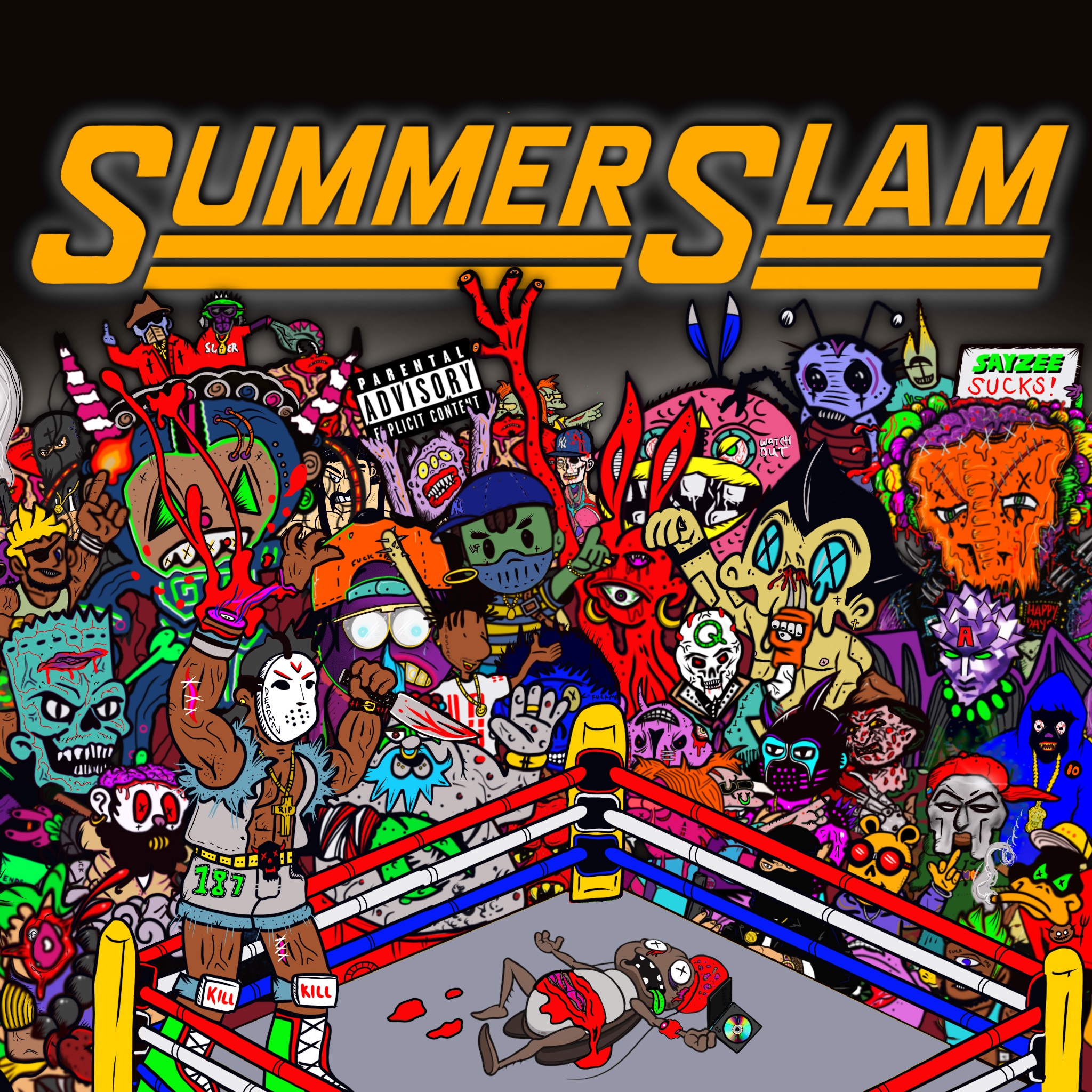
Summer Slam by Sayzee
CDs DVDs & Vinyl available here
https://hyperfollow.com/SayzeeStore
In a world where rap and wrestling both thrive on bravado, grit, and cult-like followings, Canadian rapper Sayzee is making the case that they’re more alike than anyone’s dared to admit. His latest album Summer Slam, isn’t just another nostalgic tribute to '90s wrestling. It’s a personal manifesto forged from suplexes, steel chairs, and pain tolerance.
Summer Slam is the official sequel to Sayzee’s 2013 underground release Sayzor Ramone, a grimy, character-driven project that channeled the swagger and tragedy of wrestling icon Scott Hall. Where Sayzor Ramone was introspective and mythic, Summer Slam punches harder. It's an evolution—just as wrestling evolved from smoky bingo halls to global arenas, so too does Sayzee’s sound stretch from gritty loops to bombastic, arena-ready production.
But here’s the twist: Sayzee did everything by himself. The Beats, Art, Recording, Mixes, all DIY.
“I had to do it like the wrestlers did it—DIY, blood and sweat,” he says in a phone interview. “When you come up in the underground, whether it's rap or wrestling, no one's booking you for arenas. You're hauling your own gear, you're your own promoter, you're your own producer. That’s what Summer Slam is.”
Laced with samples that echo the crash of a folding chair or the low hum of a packed gymnasium, the album draws heavily from the golden age of WWF, the lawless chaos of ECW, and the technical precision of New Japan Pro-Wrestling. It’s more than aesthetic—these influences serve as metaphors for Sayzee's own rise through hip-hop’s independent trenches.
“The underground circuit in wrestling taught me a lot,” he says. “Those guys bleed for the love. That’s what indie rap feels like too. No safety nets. No corporate polish. Just passion and pain.”
Tracks like “Big Van Vader” and “Across the Barbed Wire” reference specific wrestling lore while doubling as metaphors for industry politics and artistic perseverance. You don’t need to be a fan of suplexes to understand the bars—just someone who knows the grind. His verses speak to the overlooked, the hungry, the ones who refuse to fold.
Still, Summer Slam isn’t cosplay—it’s commentary. Sayzee uses the squared circle as a lens to explore the uncomfortable, often exploitative journey from obscurity to fame. “Some of these indie wrestlers blow up overnight,” he says. “But most of them just vanish. That’s how it is in rap too. There’s no blueprint for survival when you’re not part of the machine.”
And yet, Sayzee isn’t just surviving—he’s thriving, carving out a space that’s both theatrical and authentic. In a genre where authenticity is currency, his dedication to the DIY ethos, from rhymes to production, sets him apart.
Like an underground wrestling match in a high school gymnasium, Summer Slam isn’t about polish—it’s about energy. It’s a roar from the mat, a mic drop after a body slam, and a reminder that in both rap and wrestling, the underground still hits the hardest.
Tracklist
Credits
All Beats l All Lyrics / All Art By Sayzee !!!!