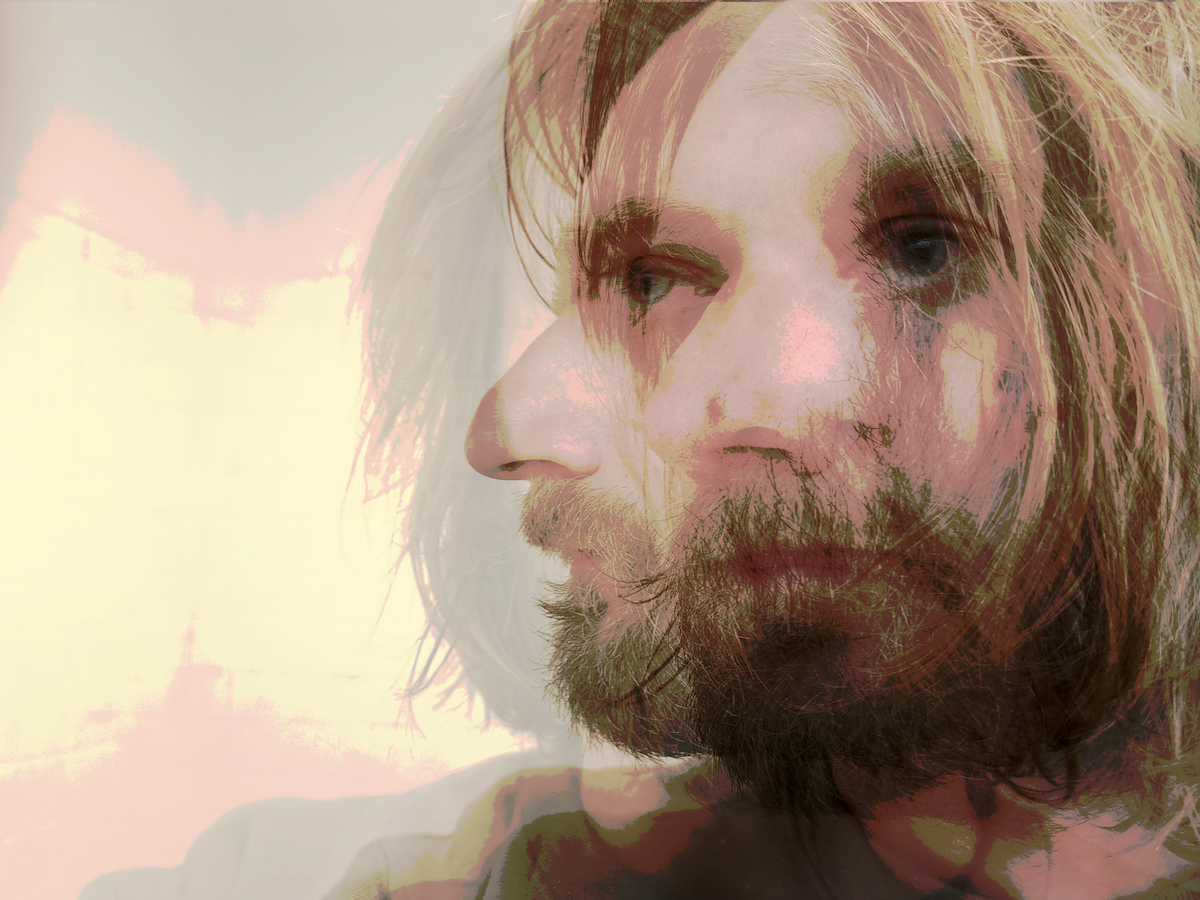
The Fold by Rouilleux
As you can see, there is no music on this page. You can listen to it here: https://thefold.rouilleux.net/. Why is that? Read on.
1. The Fold is a shape-shifting, ever-changing music album where each play is different.
2. The Fold is designed for repeated listens, gradually expanding on compositions and motifs.
3. Each individual version of The Fold is 15–20 minutes long (EP).
4. The Fold is a closed generative system without any artificial intelligence involvement.
Idea
The main reason for creating this kind of shape-shifting album is the notion that musical ideas and compositions are not finite entities which are supposed to be delimited, established and fixated in the form of an audio signal, but rather they organically change in time and can exist in many different forms simultaneously. Therein lies the problem with recordings as we know them – they trap the music in one fixed canonical form, potentially flattening the recorded material. The goal of The Fold was to find a way to let the compositions breathe and exist in a variety of their forms, without making the listening experience unnecessarily tedious. The solution turned out to be the use of generative, algorithmic and aleatoric music principles which can overcome the limitations of a recording in its single, finite form and offer many different approaches to the representation of multiplicity and diversity.
Build
The album is based on hours of prerecorded audio material divided into parts, each of which has been assigned several properties for the purposes of the algorithm – information about the key/mode, instruments used, lyrics, relationship to other parts, etc. Based on these properties, the algorithm then selects a sequence of parts in a way that satisfies the conditions defined by the author. These conditions ensure that the generated audio works as a meaningful unit lasting 15–20 minutes. Decisions that are not subject to rules that constrain the algorithm are then intentionally left to random selection, resulting in a large number of possible outcomes. This creates a closed, self-contained, definite system that does not use any external input (e.g. from the listener) or processes (e.g. by some kind of artificial intelligence).
Variability
In purely mathematical terms there are tens of thousands of different album versions, and in extreme cases two versions can differ very little from each other. Even in these situations, however, the versions should still be distinguishable from each other – the number of possible variants is intentionally limited precisely for the purposes of finding the threshold where two versions differ so little that they are virtually identical. The differences between versions are also not linear, but take place on several different levels: song order and general progress of the record, variations in song arrangements, re-use of audio material in different contexts, repetitions of the same motifs and sonic qualities in otherwise unrelated compositions etc.
Limitations of the algorithm
Through experimentation, it has become apparent over time that it’s counterproductive for certain things to be entrusted to the algorithm: if the program is in charge of synthesizing and mixing individual audio tracks, then the freedom of the pre-recorded musical material needs to be restricted much more than is desirable. Moreover, the differences between the versions that this approach produces often tend to be so small that the generated variants are de facto identical. Instead, it proved more appropriate for the author to assume the role of the algorithm in specific places and actually record all possible meaningful variations of a given section. This process was more time-consuming than computer-driven synthesis, but the result was a much more organic sound and ultimately more variability – instead of reusing the same audio signals and producing (partially) identical copies recording the same material again and repeating it with a more palpable degree of difference.
A new approach to generative music
Generative music as we know it and as it was defined by the likes of Brian Eno, has two main guiding principles: the music should play for as long as the listener wants it to play, and during this time it should constantly change and evolve without recognizable repetitions. The Fold diverges from this concept from the outset: the total length of each version is intentionally limited to about 15–20 minutes. The reason for this is that whereas Eno-inspired generative music focuses on variation on the temporal, potentially unlimited level, the goal here is variation on the level of a cohesive album (EP) and its structure. Both principles are concerned with creating a system that generates music that is ever-changing, albeit with different intentions – the former is usually used for building slowly evolving soundscapes and spaces, the latter is intended to be used for gradual exploration of a collection of songs, their interactions with each other and to reveal connections that are not apparent at first glance. Thus The Fold builds on the legacy of generative music, but approaches it from an angle that brings a new way of listening to comprehensive musical work that differs both from traditional recordings and algorithmic systems unlimited in time.
https://thefold.rouilleux.net/manifest.html
Credits
Recommendations
 An Error Has Occurred
by The Janitors
 Carousel
by The Orange Kyte
 Nervous Energy 一 触即发 (Remixes)
by Mindy Meng Wang 王萌, Tim Shiel
 Wires Turned Sideways In Time
by Duncan Marquiss
 Artificial Flowers Are For All Occasions
by Main Dice
 A Solar Flair
by Zane Coppard
 Nervous Energy 一 触即发
by Mindy Meng Wang 王萌, Tim Shiel