Muslimgauze-Muslimlahore by Muslimgauze
With Muslimgauze, this is no longer about creating legends. Nor about tragedy, nor cult status. It is about consistency. Behind the project stood Bryn Jones, who passed away in 1999, yet whose work continues to live on to this day. Jones made music out of conviction, not calculation. Release after release, without regard for the market, the scene, or expectations. Muslimlahore is another document of this attitude. What is important to note: this is not an album completed during Jones’s lifetime, but a posthumously assembled collection of previously unreleased material from the extensive Muslimgauze archive. Like many releases after Jones’s death, this one understands itself less as a closed work and more as another fragment of a project that was never designed around order or completeness. That is precisely what makes it appealing—but it also brings certain peculiarities with it.
Musically, Muslimlahore moves deep within the already familiar Muslimgauze cosmos. Here too, it is clearly audible how electronic music is fused with Oriental and Arabic elements. This mixture was never merely decorative, but a fundamental principle of the project: rhythm, timbre, and structure interlock to form a language of their own, one that consistently distances itself from Western electronic aesthetics. Percussion once again takes center stage. Dry, hard, stoic. The rhythms do not drive forward; they remain in place. They do not create a conventional arc of tension, but instead hold states. This can be fascinating, sometimes even hypnotic—but it demands patience. Changes happen slowly, often only in nuances. Small rhythmic shifts or the introduction of new sonic layers are enough to create movement.
The electronic elements remain rough and unpolished. Textures are grainy, sounds feel deliberately unfinished to me. Fragments repeatedly appear that recall radio signals, distant chants, or field recordings. These elements are not explained or contextualized, but rhythmically integrated, repeated, and fragmented. This creates the typical, slightly dusty Muslimgauze atmosphere, which feels both trance-like and abrasive. It is precisely here, however, that a particular characteristic of this release becomes apparent: the combination of all these elements has never been to everyone’s taste. And because this is posthumously compiled, unreleased material, Muslimlahore occasionally feels to me as though it lacks a clear guiding thread. The tracks come across less like parts of a deliberately planned album and more like snapshots from different phases and approaches. This is by no means meant negatively—it fits Muslimgauze’s working method—but it does mean that the album as a whole feels less cohesive than some other releases.
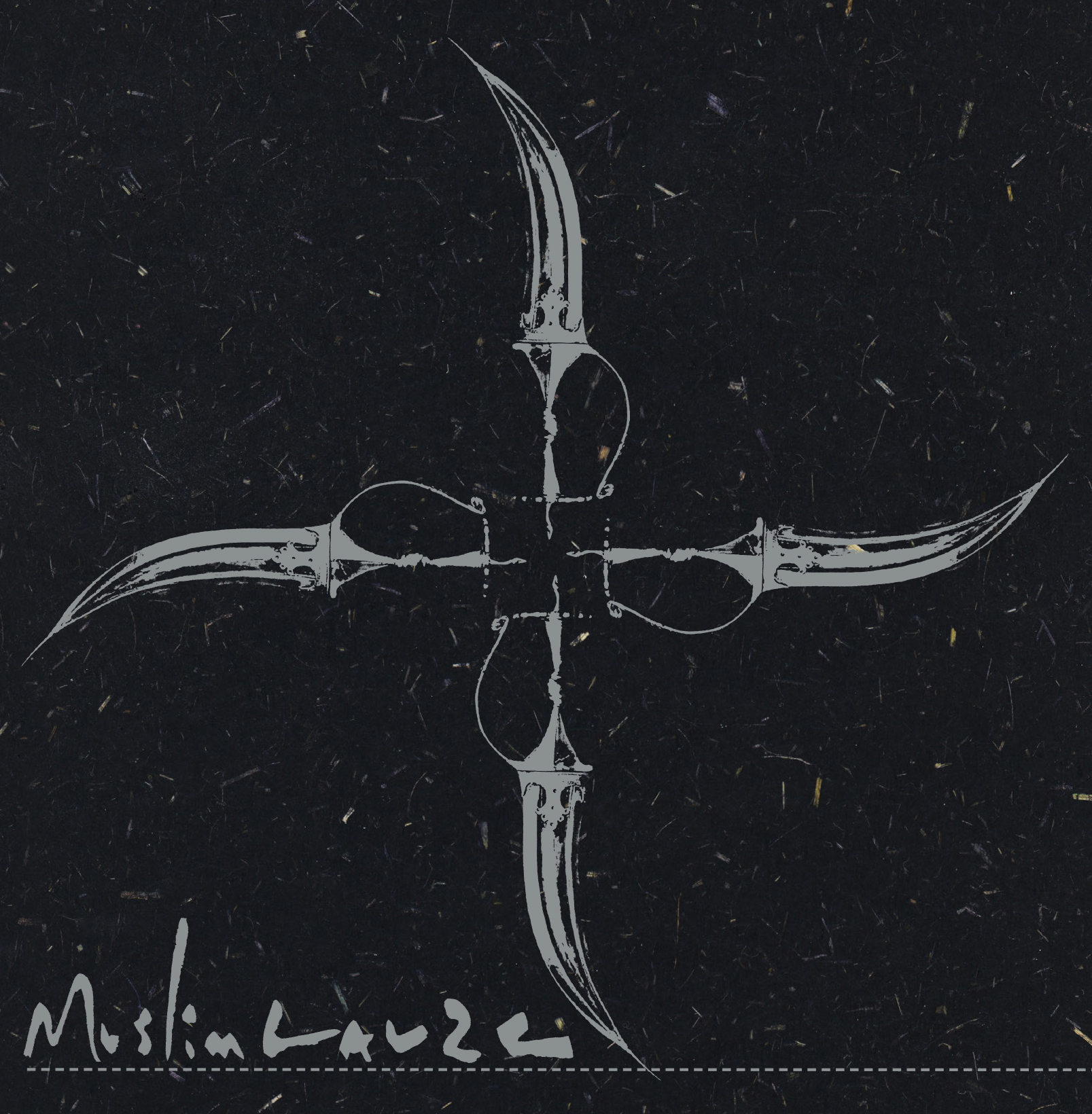
Sonically, everything remains clearly analog in character. Levels fluctuate, volumes change abruptly, sounds scrape and grind against one another. Nothing is smoothed out or modernized. This rawness feels authentic, but it can also be demanding. You can tell that nothing is explained, nothing is unified, nothing is harmonized after the fact. The release format reinforces this impression. The limited CD feels like a deliberate archival release. Not a product for quick listens, but something to be heard calmly, perhaps multiple times, in order to discover the individual layers for oneself. The heavy materials, the reduced design, and the limitation all underscore this documentary character very convincingly.
Muslimlahore is therefore a demanding release. The fusion of electronic music with Oriental–Arabic elements was never easy in Muslimgauze’s work—and here it becomes even more idiosyncratic through the posthumous assembly of unreleased material. Those expecting a clear dramatic arc or a self-contained album may be put off by the lack of stringency. For Muslimgauze fans, however, this release is highly interesting: as an insight into the creative reservoir of an artist whose work has lost none of its radicalism even decades after his death. For the curious, it is a challenging but honest entry point into a project that never sought to explain itself.
medienkonverter.de (translated from german)
Tracklist
| 1. | Sikhizlam. | 9:26 |
| 2. | Ismail Merchant. | 7:14 |
| 3. | Hinduzeen. | 8:59 |
| 4. | Maskara. | 9:35 |
| 5. | Tariq Aziz. | 10:43 |
| 6. | Muslimlahore. | 10:14 |
| 7. | Assam Tea Jar. | 2:41 |
| 8. | no-title | 2:43 |
Credits
License
All rights reserved.






Muslimgauze occupied a strange place in the musical world. He was a powerful, prolific innovator, releasing albums that were alternately beautiful and visceral, full of ambient electronics, polyrhythmic drumming and all kinds of voices and sound effects. The recordings earned him a devoted following in underground, experimental and industrial music circles worldwide.
The New York Times 1999