Unvisible Science by Mediavolo
LINER NOTES by Tyran Grillo
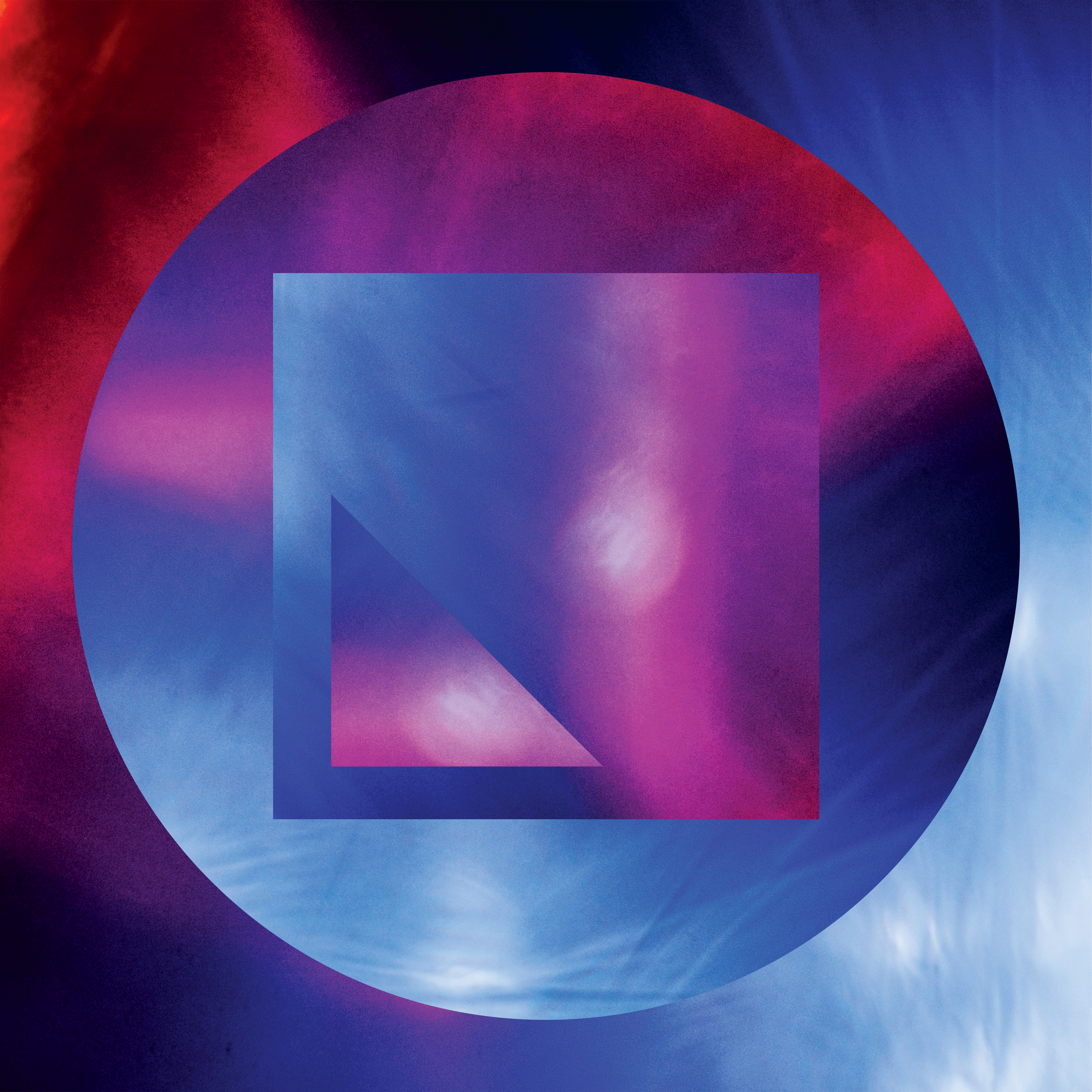
Mediavolo has long dwelled in a realm of intimacy, where half-whispered dreams and hidden impulses swirl in shadow and light. Yet Univisible Science feels like something else entirely. It is a study of the unseen, the mechanisms of emotion, and the circuitry of longing, humming with both analog warmth and digital precision.
The title, a subtle nod to In Visible Silence by Art of Noise, was originally meant to mark an ending. “There is always a bit of science in creating anything,” says vocalist Géraldine Le Cocq. “We thought of releasing it under another name, afraid people wouldn’t understand. But we realized the act of discovery—ours and theirs—was too vital to hide. It felt a shame to keep it in the drawer, so we decided to risk surprise.”
Recorded between 2012 and 2014, Univisible Science emerged during a resurgence of 1980s synth culture. Its echoes—of Siouxsie and the Banshees, Depeche Mode, and Gary Numan—are unmistakable, yet the band sought more than revival. They sought truth. The darker, more fragile side of synthwave spoke to something essential: not morbidity, but honesty. A way of seeing the human condition stripped of sentimentality. The lyrics are not easy; their emotions are unpolished. It is also a cinematic album in spirit, haunted by Blade Runner’s eternal night, a soundscape of neon melancholy where the future is a mirror that reflects only what we refuse to see.
“If you listen across all our albums,” notes Géraldine, “there are usually one or two tracks that take listeners elsewhere aesthetically. And now, we have an entire experience like that.” The result is a work both familiar and estranged, refracting the essence of Mediavolo through a prism of reinvention.
Listeners will also notice a shift as the voice of Jacques Henry, Mediavolo’s primary instrumentalist and compositional force, moves from background architect to shared presence. “When he hears a song in a male voice, it’s almost impossible to transform it,” Géraldine explains. “In Mediavolo, he would set those tracks aside. But here, we stopped discriminating. We let both voices breathe.”
Unvisible Science begins and ends with the soul: “Soul Chemistry” and “Soul Defence” form a loop that opens rather than closes. Between them unfolds a cycle of birth, loss, and recognition. These bookends pulse with retro rhythms and soft synth glows, where Géraldine’s voice moves like a dream remembering itself. The guitars are neurons firing in the dark, each note an act of resistance against oblivion. “Crush the urge to fight,” she sings, “keep alarms at bay.” Thus armored and exposed, we advance through a landscape of collapse toward something unnamed.
In “Daily Round,” the unspoken becomes its own ghost: missed chances, unacted words, the hollow ache of what might have been. “When your mind takes to the streets,” Jacques intones, “we’re people trying to defeat agony days.” From there, “Made It So Far” returns home to its origin (having first seen daylight on 2024’s Away Within), sun-blind and blurred by memory, a song suspended between past and future.
The heartbeat arrives with “Synthoria.” Though colder, it is resolutely alive, an electronic waltz with introspection. Distortion blurs into desire until the listener can no longer tell the difference between emotion and electricity. It’s a love song to sound itself, to the act of creation as love incarnate. On the flip side, “Why Stay” unspools the anatomy of a dissolving relationship. Each chord is a fragment of glass reflecting a different truth, while “Ghost Life” drifts through the fog of modern existence, in which survival feels like looking out a window without a body.
Then, the descent deepens. “Horse” is primal, splitting the self into body and spirit, human and beast. It gallops through forgotten pages of time, where instinct overrides reflection. “Fire Walking” answers it with trembling balance, counting down the seconds before surrender, finding calm within the rising pulse.
The interludinal “Friend and Foe” swirls with promise and reconciliation, two voices weaving into one act of healing, while “Dive” plays like rebirth, oscillating between gravity and grace. And when the circle returns to “Soul Defence,” we understand that the journey was never about escape but exposure. Univisible Science does not desire resolution. It embraces the awareness that our memories and our sounds are all experiments in connection.
Every song is an equation without a solution, where feeling and reason orbit each other like twin stars. Their science is not of the laboratory, but of the unprovable, invisible force that binds experience to a compound hypothesis: What if every note, every silence, were a glimpse into the machinery of the soul? What if to create is to measure the distance between what we can express and what remains silent?
Such is the experiment Mediavolo began and continues to refine as it drips another chemical into the beaker.
Tracklist
| 1. | Soul Chemistry | 3:10 |
| 2. | Daily Round | 3:18 |
| 3. | Made It So Far (US version) | 4:06 |
| 4. | Synthoria | 3:46 |
| 5. | Why Stay | 3:35 |
| 6. | Ghost Life | 4:19 |
| 7. | Horse | 3:33 |
| 8. | Fire Walking | 4:46 |
| 9. | Friend and Foe | 5:50 |
| 10. | Dive | 4:01 |
| 11. | Soul Defence | 4:09 |
Credits
Composition, arrangements, all instruments and vocals: Jacques Henry
Lyrics and vocals: Géraldine Le Cocq
License
All rights reserved.




Mediavolo was born in 1999.
Represented by Jacques Henry (composer), and Géraldine Le Cocq (lyricist), the band is also composed of Eric Le Pape (drums), and Fabrice Duhamel (keyboards).
Albums: Soleil Sans Retour (Saravah, 2003), A Secret Sound (Kalinkaland, 2006), Unaltered Empire (Prikosnovénie, 2009) and Modern Cause (Prikosnovénie, 2011).
Current release: "Away within".