Filaments by James Welsh
Like so many of the most accomplished, tirelessly dedicated and often underappreciated artists, James Welsh embodies only one biographical cliché in parallel to his unpredictable discography; his life has been one immersed in music. Attending gigs with his family before he could walk, he was soon intuitively immersed enough to surely have been North Yorkshire’s foremost eight-year old expert on Bluegrass. By his mid-teens, Welsh was an accomplished guitarist himself, deep in experiments with multiple tape recorders, driven by dreams of a sonic frontier heard and glimpsed though Future Music cover CDs. Before he knew it, he was welcoming his twenties in Texas, travelling to the Lone Star state upon invitation to take over electronics for post-punk outfit, ‘The Rise’.
Returning to the UK, Welsh was soon playing the main stage at Creamfields and jetting to sun-kissed Ibiza pool parties alike while performing as Ocelot, an alias under which he remixed artists as thrillingly divergent as Depeche Mode, Britney Spears and Rob Zombie. Under his own name, he nonetheless retained the right to release uncompromising dance music that maintained the ethos and promise of nineties rave culture. Spanning sub-genres with ease, these twelve-inches earned fans including Giles Peterson, Mary Anne Hobbes and most notably, Erol Alkan, whose label Phantasy has since become the principal outlet for Welsh’s music, including under the previous, Sunn 0))) indebted alias of Kamera.
A life immersed in music is not, however, life in its entirety. In November 2016, Welsh’s second child, Rory, died at the age of one following a diagnosis of leukemia. This profound and devastating event is the basis of ‘Filaments’, the artist’s first full-length LP under their own name, to be released on Phantasy in early 2026. Accompanied by an original twenty-five minute film from BAFTA award-winning director Kieran Evans, Filaments’ attempts to reckon with this incomparable tragedy a decade on, orchestrating elements of techno, experimental and post-rock influences, seeking catharsis in the creativity for which Welsh continues to boldly embrace.
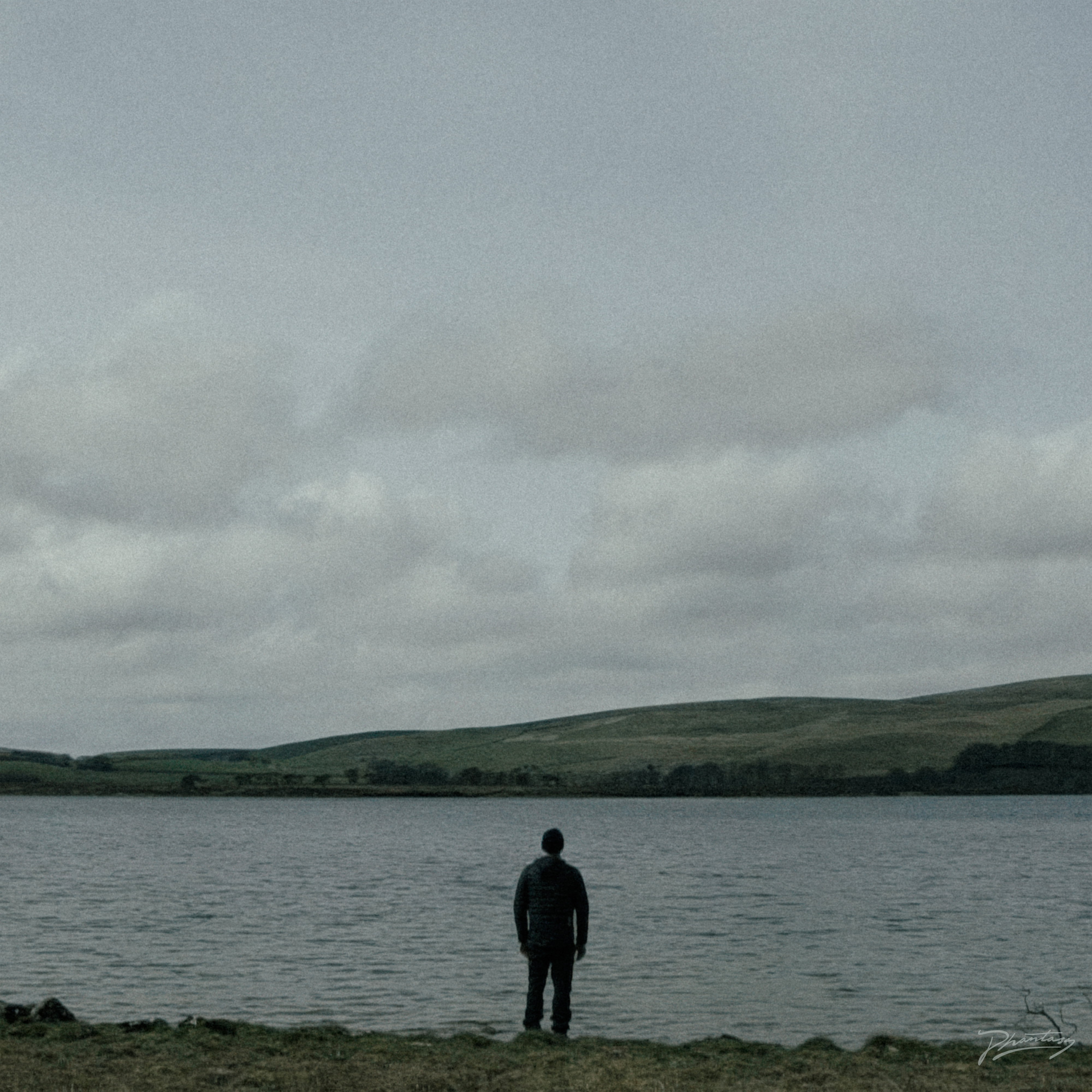
In Evans’ film, shot across the deeply cinematic landscape of wintery North Yorkshire, rugged peaks and ancient valleys are etched into time, as life and death intertwines on their fringes. In small, urban communities, locals joyously fill the cold night air with colour from fireworks and sparklers. On the horizon, Welsh himself appears suspended in time and frozen in grief. In both sound and vision, ‘Filaments’ powerful compositions gradually push his figure forward, its hypnotic musical sequences escalating from the abstract and toward a powerful, deeply personal conclusion.
On record, ‘Filaments’ begins with ‘Hawk’, and the sound of an organ filling a chamber, its growing pressure suddenly broken by a wave of drum breaks. Further establishing Welsh’s signature alchemy between lush, organic textures and the machine therapy of his studio, ‘Fret’ pulses disconcertingly, its metronomic arrangement seemingly decaying, before surging with passages of dramatic electro. Completing the LP’s bracing first act, ‘Sierra Delta’ offers the first glimpses of transcendence, or at least something approaching it, as a reverb-soaked melody progresses into hopeful birdsong.
Welsh delves deeper into his most formative influences in search of reassurance. ‘Something Red’ embraces the endless possibilities of his youth, enveloping listeners with a sprawling cosmic guitar line, a moment that ultimately explodes into a shimmering industrial beat. ‘Mechanism’ pushes Welsh’s hardcore nous further still. Arguably the album’s raw peak in both emotion and instrumentation, its sustained, beatless and compelling riff places listeners in the midst of his process, at once weightless and uncompromisingly heavy.
Lead single Stove Goblin understands and even evolves the legacy of experimental electronics and IDM that continue to emerge from Yorkshire’s strange landscape. Its spacious, undeniable rhythms are imbued with a unique psychedelia, as Welsh’s analogue machines seem to mirror their user, vying to reach out and communicate the unfathomable. At either side, ‘A65’ samples speeding countryside traffic, coaxing acid-tinted club escapism from the most banal of routes, while ‘Zurich’ presents a comparatively soft rush, as the light of melancholy and euphoria refracts through the album’s darker clouds.
This forward motion finally leads to ‘North’, the album’s climax and crucial final elegy. Recorded close to the loss that runs so deeply through ‘Filaments’, it serves as something of the guiding star of its namesake, a hymnal suite of otherworldly, overwhelming electronics that nonetheless blossoms into a soulful exodus of emotion. Here, as in the conclusion of Evans’ film, Welsh finally opens his eyes, bravely confronting the depth of his pain. ‘Filaments’ does not, and can not offer resolution. Instead, Welsh moves forward with vulnerability and self-compassion, seeking meaning and beauty in a life profoundly altered.
Tracklist
| 1. | Hawk | 5:54 |
| 2. | Fret | 5:03 |
| 3. | Sierra Delta | 7:22 |
| 4. | Something Red | 4:54 |
| 5. | Mechanism | 3:02 |
| 6. | A65 | 6:53 |
| 7. | Stove Goblin | 4:47 |
| 8. | Zurich | 6:55 |
| 9. | North | 6:44 |
Videos
Credits
License
All rights reserved.