Kagome Kagome by Delphine Dora & Ayami Suzuki
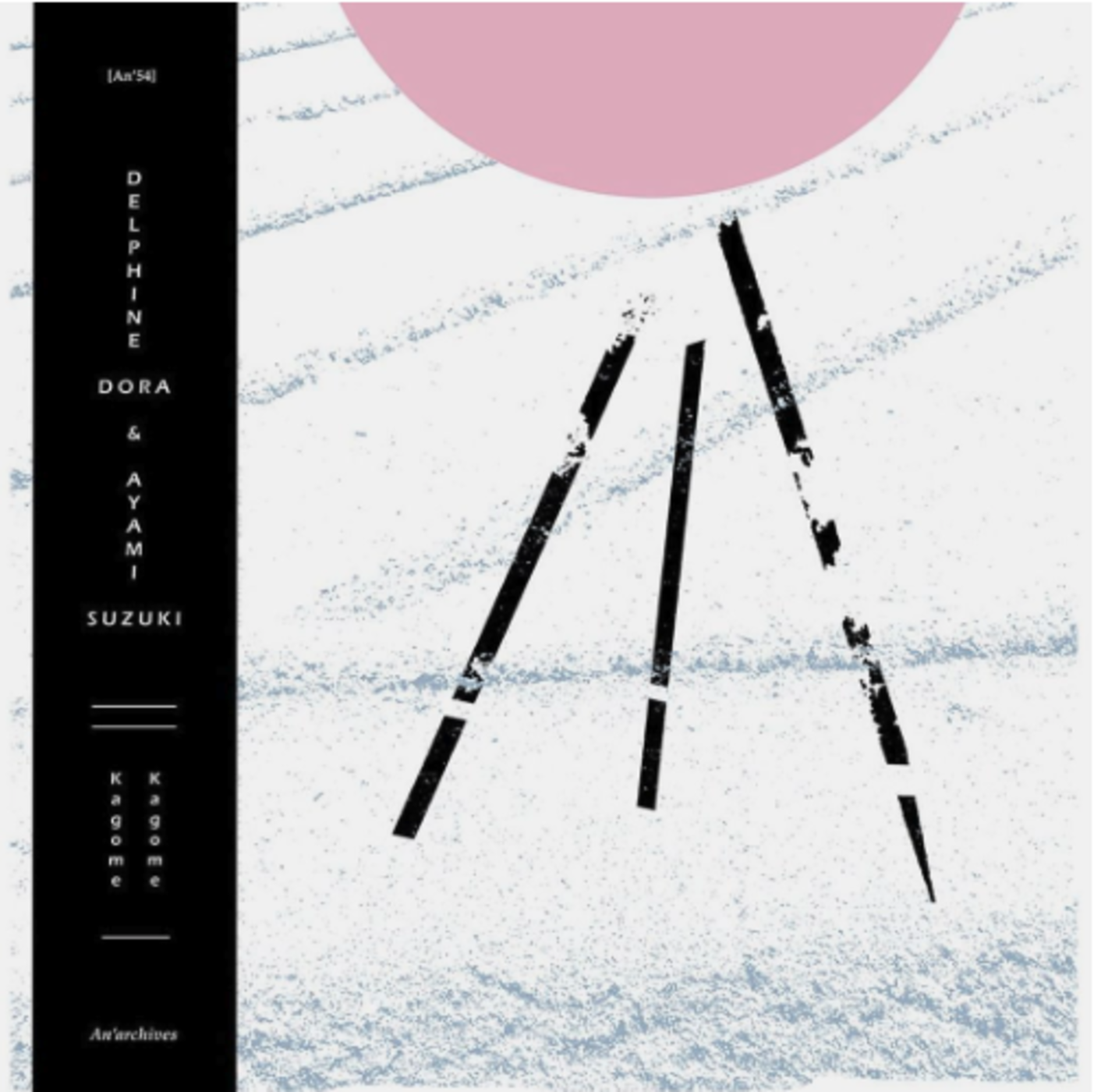
Two decades of French experimentalism meets Japanese spiritual practice in this haunting collaboration. Recorded around a 104-year-old harmonium, Dora and Suzuki channel otherworldly beauty through voice and electronics - music of prayer, magic, and genuine mystery.
Purchase LP on Soundohm : https://www.soundohm.com/product/kagome-kagome-lp
or An'archives : https://anarchives.com/2025/09/26/delphine-dora-ayami-suzuki-lp/
An'archives presents Kagome Kagome, the first collaboration between France's Delphine Dora and Japan's Ayami Suzuki - a deep album of prayer and magic that feels mysteriously dislocated from our time, channeling otherworldly beauty through voice, harmonium, and electronics. Dora arrives with two decades of idiosyncratic releases for labels including Modern Love, Morc, and Recital, alongside collaborations with Michel Henritzi and Sophie Cooper. Suzuki operates within Japan's improvised music tradition through work with Takashi Masubuchi, Tomo, and Leo Okagawa, while drawing from folk song, ambience, and claustrophobic drone.
The two artists met during Dora's May 2024 tour of Japan, having already established contact around shared concepts of "otherworldliness" and "impermanence." As Suzuki explains, they "explored the relationship between 'the invisible' and sound in Japanese culture - a common interest we share." Recording took place over several days in Kanumi, Tochigi prefecture, at a space called Center. The sessions centered around a vintage 104-year-old harmonium from Nippon Gakki Seizo Co. that had just been repaired. "It was as if the harmonium had been waiting for Delphine to draw sound from it," Suzuki recalls. "I felt it was a beautiful relationship where they could guide each other."
That sense of channeled communication permeates Kagome Kagome. Dora's harmonium provides the album's wheezing, ancient spine, while Suzuki's free-floating voice and gaseous electronics wrap around its tonality. Their voices nestle together with uncanny synchronicity - "when we sang together in a tunnel," Suzuki notes, "there were times when we sang the exact same melody without planning. It happened so naturally that the boundaries between us became blurred." The album takes its title from a Japanese children's song, with track titles constituting the song's lyrics in alternating Japanese (Romanized) and French. Urban legend connects "Kagome Kagome" to the Nikko Toshogu Shrine, near Center, which the duo visited during their residency. "The mysterious lyrics of 'Kagome Kagome' and its puzzle-like connection to Nikko Toshogu were a perfect fit for this mysterious album," Suzuki reflects, "which I think has its own kind of puzzle-like elements."
This is music of divination and ritual, possessing the eerie otherness that connects it to channelers of ghostly mystery like Nico, Kendra Smith, and Charalambides. Yet Kagome Kagome exists in its own liminal space - where French experimentalism meets Japanese spiritual practice, where ancient instruments commune with contemporary electronics, where two voices become one voice becomes something beyond human utterance entirely. -- Jon Dale
-------------------------------------------------------------------------------
NatureStrip records :
the debut collaboration between delphine dora & ayami suzuki, 'kagome kagome', a mass of free-folk drone & abstracted devotional music. total breathtaker, instant classique. (very limited/not many left etc. etc.)
both dora & suzuki have garnered endless kudos for their deeply idiosyncratic renderings of folk music/free improvisation, adept in distending their strands to heavily out ends doused in considered drone, cracked electroacoustics & a firm out of time quality, song dissolved. the two's shared fixations are of such depth that here their individual contributions are almost exclusively decipherable as one, trading glossolalic chorals & extended tonal bathing wrought from harmonium & smudged electronics, suspended vocal runs trailing into & around each other, melding into these gorgeous billowing fogs before drifting apart again, gaseous & intoxicated/ing. their sound is decidedly free & loose but the way they follow each other speaks to a deep synthesis of idea, a subtle unthreading of early music & ritual dervish, divine keening atop head-enveloping minimalism that subtly warps & extends, cocooning then ripping out the floor beneath you in the lushest, most delicate of styles. 'kagome kagome' is best heard as some vein of spectral psalm, deeply ephemeral & floating/faded, but it's much more singular than that, totally speculative & more than a touch possessed by its own wandering spirit, firmly in the moment but ever-gesturing elsewhere/upward.
a serious astounder, hardest recommendation. up in the web shop/in-store now.
---------------------------------------------------------------------------------
"Delphine Dora rencontre Ayami Suzuki lors d’une tournée au Japon en 2024, leurs univers musicaux devaient se rencontrer dans un mouvement centrifuge, glisser l’un sur l’autre, se fondre pour renaître autres, un. Deux voix qui s’accordent dans ce qui semble des psalmodies faites pour un monde qui s’efface, deux voix prises d’une profonde mélancolie face à ce qui disparaît. La musique est l’art de l’éphémère : elle annonce la perte, la disparition, notre impermanence, elle en fait l’élégie. On pourrait songer à ces chanteuses mystiques du Moyen-Âge, aux chœurs monacaux, la comparaison se renforçant de la présence d’un orgue, de ses accords tenus et de ses bourdons sombres. (...)"
Michel HENRITZI
https://www.revue-et-corrigee.net/2025/09/10/delphine-dora-ayami-suzuki/
Tracklist
| 1. | Kagome Kagome | 3:21 |
| 2. | L'oiseau dans la cage | 9:43 |
| 3. | Itsu Itsu Deyaru | 8:24 |
| 4. | Le soir de l'aube | 9:30 |
| 5. | Tsuru to Kame ga Subetta | 7:47 |
| 6. | Qui est derrière le devant ? | 4:22 |
Credits
Ayami Suzuki : voix, électronique
Delphine Dora : harmonium, voix
Enregistré au Center Kanuma, Tochigi (Japon), 16 mai 2024
License
All rights reserved.




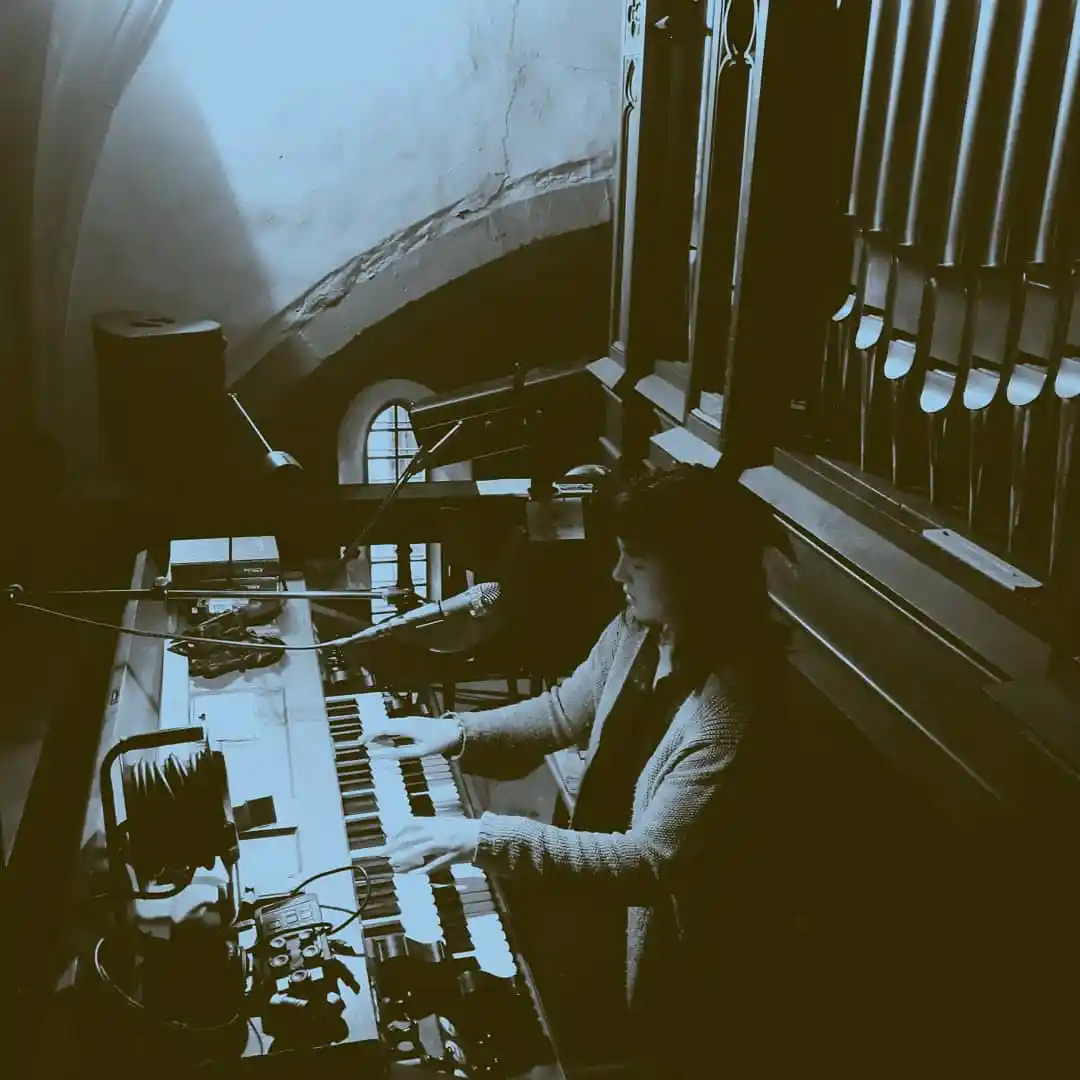
Delphine Dora est une musicienne, compositrice, improvisatrice de France. Sa musique iconoclaste peut se lire comme un travail de cartographie personnel, basée sur une approche intuitive de la composition et nourrie de nombreuses approches. Elle développe depuis une dizaine d’années un univers musical intimiste et pluriel, en perpétuel métamorphose situé au croisement de différents genres musicaux